Today's
EarthStation1.com 15% (Or More!) Off Commemorative Memorial Title:
Revelation: The History Of Christianity DVD, Video Download, USB
Drive
Today, November 2, 2026
November 2: Allhallowtide (Hallowtide,
Allsaintstide, The Hallowmas Season): All Souls' Day (The
Commemoration Of All The Faithful Departed): -- A day of prayer
and remembrance for the faithful departed, observed by certain
Christian denominations. Through prayer, intercessions, alms and
visits to cemeteries, people commemorate the poor souls in
purgatory and gain them indulgences. All Souls' Day is the third
and final day of Allhallowtide, the Western Christian season
encompassing the triduum (a religious observance that lasts three
days) of All Saints' Eve (Halloween), All Saints' Day (All
Hallows' Day) and All Souls' Day. oberved by Roman Catholicis and
some Lutherans and Anglicans. Before the standardization of
Western Christian observance on November 2 by St. Odilo of Cluny
in the 10th century, many Catholic congregations celebrated All
Souls Day on various dates during the Easter season, as it is
still observed in some Eastern Orthodox Church, Eastern Catholic
and Eastern Lutheran churches. Churches of the East Syriac Rite
(Syro-Malabar Catholic Church, Chaldean Catholic Church, Assyrian
Church of the East, Ancient Church of the East) commemorate all
the faithful departed on the Friday before Lent. On Sale Until
Midnight Tonight PT!
https://store.earthstation1.com/revelation-the-history-of-christianity-documentary.html
Today's
EarthStation1.com 15% (Or More!) Off Commemorative Memorial Title:
Sweat Of The Sun: The Riches Of Ancient America DVD MP4 Video
Download
Today, November 2, 2026
November 1-2: The Day Of The Dead
(Spanish: Dia de Los Muertos): -- An annual day for Mexicans to
welcome the souls of their deceased relatives back for a brief
reunion. The day is not one of mourning, but instead an
opportunity to portray death in a positive light, as a part of the
human experience. When a person dies, it often brings feelings of
loss and grief. People in most cultures believe they will never
see their deceased love one again. Some, however, feel their
departed loved one will always be with them in spirit. They
believe their departed loved one sends signs that they are still
there and provides help in times of need. One thing many cultures
have in common is that when the body dies, it turns into an
eternal soul. Where this soul resides is debated among faiths and
cultures. Many Mexicans believe they can be reunited with their
deceased loved ones. This is what the Day Of The Dead is all
about. It's a way to encourage departed loved ones to come back
for a brief visit. On this day, those who celebrate it exchange
mourning for celebration. Many people celebrate this day by
creating Calaveras, which are representations of human skulls. The
skulls are brightly colored and contain smiling faces, to show
that death is not scary. Many cities in Mexico and the United
States have parades where people paint their faces and dress up in
costumes. Other ways to celebrate this day include creating
offerings at makeshift alters that contain yellow marigold
flowers, photos of the departed, and their favorite foods. These
offerings encourage visits from departed loved ones. Another way
to participate is to watch a movie that features the Day Of The
Dead, such as the James Bond movie Spectre or the animated hit
Coco. You can also say, "Feliz dia de los Meurtos" or
share this day on social media with #DayOfTheDead. The origins of
this day go all the way back to the ancient Aztecs. They had a
unique view of death and saw it as an ever-present part of life.
Upon dying, the Aztecs believed a person traveled to a place
called the Land of the Dead. After several years of going through
nine challenging levels, their soul could finally come to rest. To
aid their departed loved ones for the journey, they often brought
food and water to their loved one's graves. For many years, this
day was mostly celebrated in the rural, indigenous parts of
Mexico. In the 1980s, this celebration began spreading to the
cities. UNESCO added the Day Of The Dead to its list of Intangible
Cultural Heritage of Humanity in 2008. In 2016, Mexico City hosted
its first-ever Day Of The Dead parade. On Sale Until Midnight
Tonight PT!
https://store.earthstation1.com/sweat-of-the-sun-the-riches-of-ancient-america-dvd-mp4-video-downloa4.html
Today's
EarthStation1.com 15% (Or More!) Off Commemorative Memorial Title:
Last Images Of War Journalists Of The Soviet-Afghan War DVD, MP4,
USB
Today, November 2, 2026
November 2: The International Day To End
Impunity For Crimes Against Journalists: -- An annual observance
declared to be marked on November 2 by United Nations General
Assembly Resolution A/RES/68/163, which calls on all Member States
to take concrete steps to combat the current culture of impunity
in their countries. Every year on November 2 -a date that
corresponds with the assassination of two French journalists in
Mali - this day is honored to mark the anniversary of their
deaths. Violence and threats against journalists have been a
long-standing concern in Europe and beyond. On November 23, 2011,
the International Day to End Impunity for Crimes Against
Journalists was established by the International Freedom of Speech
Exchange (IFEX) -a worldwide network of civil society groups
dedicated to defending and promoting the right to freedom of
expression and expression rights. On this day in 2009, the
'Ampatuan' massacre was commemorated for Crimes Against
Journalists - which was the single bloodiest assault on
journalists in modern history - in which 57 people were killed,
including 32 journalists and media employees. In December 2013,
following extensive lobbying by IFEX members and other civil
society advocates for freedom of expression, the United Nations
General Assembly's 70th plenary session passed 'Resolution
68/163,' designating November 2 as the International Day to End
Impunity for Crimes Against Journalists (I.D.E.I.). Claude Verlon
and Ghislaine Dupont - two French journalists who were murdered
while reporting in Mali earlier that year- were commemorated on
the anniversary of the United Nations Day. IFEX currently
organizes the 'No Impunity Campaign,' which argues year-round for
all those viciously attacked for exercising their right to freedom
of speech in a democratic society. Since 2013, international
commemorations of the International Day of Impunity for Crimes
Against Journalists and Media Professionals (I.D.E.I.) have
provided a unique opportunity to raise awareness and promote a
productive discussion among all actors involved in the fight
against impunity for crimes against journalists. Not all nations
welcome freedom of expression, and being a journalist may be a
dangerous profession. According to the United Nations, between
2004 and 2014, more than 700 journalists were slain. An alarming
number of these fatalities result from either unsolved murders or
shootings in crossfire/combat. Only a limited fraction of these
have resulted in a criminal conviction thus far. On Sale Until
Midnight Tonight PT!
https://store.earthstation1.com/last-images-of-war-journalists-sovietafghan-war-dvd-mp4-usb-driv4.html
Today's
EarthStation1.com 15% (Or More!) Off Commemorative Memorial Title:
The French Revolution Series + Irish Rebellion & You Are There
MP4 DVD
Today, November 2, 2026
November 2, 1755: #BOTD: Marie
Antoinette, Austrian-French Queen Consort of Louis XVI Of France,
the last Queen of France before the French Revolution, guillotined
at the height of the French Revolution as the widow of Louis XVI
(d. October 16, 1793) is #born an Archduchess of Austria, Maria
Antonia Josepha Johanna, at the Hofburg Palace, Vienna, Archduchy
of Austria, Holy Roman Empire, and was the penultimate child and
youngest daughter of Empress Maria Theresa and Francis I, Holy
Roman Emperor. After a two-day trial began on October 4, 1793,
Marie Antoinette was convicted by the Revolutionary Tribunal of
high treason and executed by guillotine on the Place De La
Revolution on 16 October 1793. Louis XVI (August 23, 1754 -
January 21. 1793), born Louis-Auguste Capet, was the last King Of
France before the fall of the monarchy during the French
Revolution. He was referred to as Citizen Louis Capet during the
final weeks of his life. In 1765, at the death of his father,
Louis, son and heir apparent of Louis XV, Louis-Auguste became the
new Dauphin of France. Upon his grandfather's death on May 10,
1774, he assumed the title "King Of France and Navarre",
which he used until September 4, 1791, when he received the title
of "King of the French" until the monarchy was abolished
on September 21, 1792. Louis XVI died when he was guillotined on
January 21, 1793. Marie Antonette's wedding to Louis XVI was a
proxy wedding, also knon as a proxy marriage, a wedding in which
one or both of the individuals being united are not physically
present, usually being represented instead by other persons. If
both partners are absent a double proxy wedding occurs. Marriage
by proxy is usually resorted to either when a couple wish to marry
but one or both partners cannot attend for reasons such as
military service, imprisonment, or travel restrictions; or when a
couple lives in a jurisdiction in which they cannot legally marry.
The phrase "Let them eat cake" is often attributed to
Marie Antoinette, but there is no evidence that she ever uttered
it, and it is now generally regarded as a journalistic cliche.
This phrase originally appeared in Book VI of the first part of
Jean-Jacques Rousseau's autobiographical work Les Confessions,
finished in 1767 and published in 1782: "Finally I recalled
the stopgap solution of a great princess who was told that the
peasants had no bread, and who responded: 'Let them eat brioche'".
Rousseau ascribes these words to a "great princess", but
the purported writing date precedes Marie Antoinette's arrival in
France. Some think that Rousseau invented it altogether; some
believe that she actually referred to the white filling between
walkway stones of the type, but not the same content, as that used
between sidewalk slabs today. After a two-day pre-determined trial
in the Palais de Justice, Paris held by the Revolutionary Tribunal
convicted her of high treason the day before, Marie Antoinette was
guillotined on the Place De La Revolution at the height of the
French Revolution. She is buried at The Basilica Of Saint-Denis in
Saint-Denis, Paris, France. On Sale Until Midnight Tonight PT!
https://store.earthstation1.com/the-french-revolution-dvd-3-part-tv-documentary-serie3.html
Today's
EarthStation1.com 15% (Or More!) Off Commemorative Memorial Title:
Scams, Schemes & Scoundrels: James Randi Vs Con Men MP4
Download DVD
Today, November 2, 2026
November 2, 1860: #BOTD: Soapy Smith, con
artist, saloon and gambling house proprietor, political boss,
gangster, and crime boss of the 19th-century Old West (d. July 8,
1898) is #born Jefferson Randolph Smith II in Coweta County,
Georgia (NOTE: It is hardly likely that Frank Capra named the
protagonist of "Mr. Smith Goes to Washington",
"Jefferson Smith", after him :) ). Soapy Smith operated
confidence schemes across the Western United States, and had a
large hand in organized criminal operations in both Colorado and
the District of Alaska. Smith gained notoriety through his "Prize
Soap Racket," in which he would sell bars of soap with prize
money hidden in some of the bars' packaging in order to increase
sales. However, through sleight-of-hand, he would ensure that only
members of his gang purchased "prize" soap. The racket
led to his sobriquet of "Soapy", which remained with him
to his death. The success of his soap racket and other scams
helped him finance three successive criminal empires in Denver,
Creede and Skagway, respectively. He was killed during The
Shootout On Juneau Wharf, a shootout on Juneau Wharf in Skagway,
District of Alaska on July 8, 1898. The shootout occurred because
Frank H. Reid (1844 - July 20, 1898), American soldier, teacher,
city engineer, and vigilante, had undertook to end Soapy Smith's
life because Smith arranged to kill Reid because he was going to a
vigilante meeting to tell the sheriff of Dawson city about Soapy
Smith's cons. Jesse Murphy was one of those vigilantes, and was
killed while attempting to guard the meeting. The Shootout On
Juneau Wharf gunfight was between Soapy Smith, Frank H. Reid, and
Jesse Murphy, and took place on a Friday evening at approximately
9:15 p.m.. Smith was shot in the heart and died shortly
afterwards, and Reid died of his injuries 12 days later. He is
buried at Gold Rush Cemetery in Skagway, Alaska. On Sale Until
Midnight Tonight PT!
https://store.earthstation1.com/scams-schemes-and-scoundrels-james-randi-vs-con-men-mp4-download-dvd.html
Today's
EarthStation1.com 15% (Or More!) Off Commemorative Memorial Title:
World War 1 TV Series With Robert Ryan DVD, Video Download, USB
Drive
Today, November 2, 2026
November 2, 1914: The European Civil War:
World War I: The First European War (The European Theater Of World
War I): The African Theatre Of World War I: The Middle Eastern
Theater Of World War I: The Russian Declaration Of War On The
Ottoman Empire: -- The Russian Empire declares war on the Ottoman
Empire and the Dardanelles are subsequently closed. The Russian
Emperor Alexander II had persued during his 1855-1881 reign a
policy in Eastern Europe of protecting the Orthodox Christians
under the rule of the Ottoman Empire. That policy remained after
his death during the reign of the Tsars Alexander III and Nicholas
II, and by 1914 this led to Russia's entry into World War I on the
side of France and the United Kingdom against the German,
Austro-Hungarian, and Ottoman empires. However, German control of
the Baltic Sea and German-Ottoman control of the Black Sea severed
Russia from most of its foreign supplies and potential markets. As
part of the only passage between the Black Sea and the
Mediterranean, the Dardanelles has always been of great importance
from a commercial and military point of view, and remains
strategically important today. It is a major sea access route for
numerous countries, including Russia and Ukraine. Control over it
has been an objective of a number of hostilities in modern
history, notably the attack of the Allied Powers on the
Dardanelles during the 1915 Battle Of Gallipoli, when the Allies
sent a substantial invasion force of British, Indian, Australian,
New Zealand, French and Newfoundland troops to attempt to open up
the straits. In the Gallipoli campaign, Turkish troops trapped the
Allies on the coasts of the Gallipoli peninsula. The campaign did
damage to the career of Winston Churchill, then the First Lord of
the Admiralty (in office 1911-1915), who had eagerly promoted the
unsuccessful use of Royal Navy sea-power to force open the
straits. Mustafa Kemal Ataturk, later founder of the Republic of
Turkey, served as a commander for the Ottomans during the land
campaign. On Sale Until Midnight Tonight PT!
https://store.earthstation1.com/world-war-1-robert-ryan-4-dual-layer-dvds-26-episode-tv-se1426.html
Today's
EarthStation1.com 15% (Or More!) Off Commemorative Memorial Title:
Israeli-Palestinian Conflict Documentaries: MP4 Download Or DVD
Today, November 2, 2026
November 2, 1917: The European Civil War:
World War I: The First European War (The European Theater Of World
War I): The African Theatre Of World War I: The Middle Eastern
Theater Of World War I: Zionism: The Arab-Israeli Conflict: The
Balfour Declaration: -- The British government proclaims in The
Balfour Declaration support for the "establishment in
Palestine of a national home for the Jewish people" with the
clear understanding "that nothing shall be done which may
prejudice the civil and religious rights of existing non-Jewish
communities". The declaration had many long-lasting
consequences. It greatly increased popular support for Zionism,
and led to the creation of Mandatory Palestine, which later became
Israel and the Palestinian territories. As a result it is
considered to have caused the ongoing Israeli-Palestinian
conflict, often described as the world's most intractable
conflict. Controversy remains over a number of areas, such as
whether the declaration contradicted earlier promises the British
made to the Sharif of Mecca in the McMahon-Hussein correspondence
which agreed to recognize Arab independence after World War I, an
agreement that T.E. Lawrence, aka Lawrence Of Arabia, did his best
at the Versailles Peace Conference to make the Allies abide by. On
Sale Until Midnight Tonight PT!
https://store.earthstation1.com/terror-the-israelipalestinian-conflict-dvd-mp4-video-downloa4.html
Today's
EarthStation1.com 15% (Or More!) Off Commemorative Memorial Title:
WWI: A History In Pictures World War I JPG Photos CD, Download,
USB
Today, November 2, 2026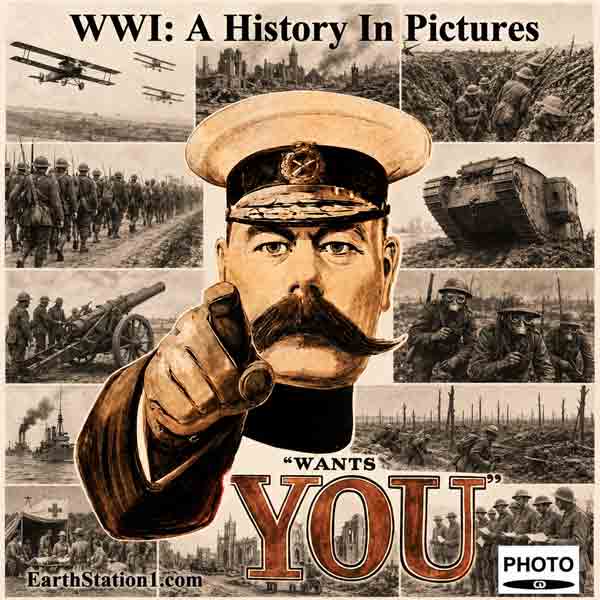
November 2, 1918: The European Civil War:
World War I: The First European War (The European Theater Of World
War I): The Western Front Of World War I: Naval Warfare Of World
War I: The Naval Order Of 24 October 1918: The Wilhelmshaven
Mutiny: The Kiel Mutiny: -- Led by the sailor Karl Artelt, who
worked in the repair ship yard for Imperial German Navy torpedo
boats in Kiel-Wik, and by the mobilized shipyard worker Lothar
Popp, both USPD (Independent Social Democratic Party of Germany)
members, the Kiel Mutiny (German: Kieler Matrosenaufstand), a
major revolt by sailors of the German High Seas Fleet which
triggered the German Revolution which within a few days swept
aside the monarchy, ended the German Empire, ended World War I and
established of the Weimar Republic, was planned and organized for
the following day with some 250 sailors and stokers of the German
Third Navy Squadron. Having met the evening prior at the Union
House in Kiel seeking to prevent the German High Seas Fleet from
setting sail to fight the Royal Navy, and to organize the release
of their comrades who had been arrested in the aftermath of the
Wilhelmshaven Mutiny of October 29-30, they met on November 2 at
an even larger joint open-air meeting at Kiel's Large Drill Ground
(German: Grosser Exerzierplatz) and called for a still larger
meeting the following day, November 3, at the same place. On the
night of the October 29-30, 1918, the Wilhelmshaven Mutiny
occurred as the German High Seas Fleet was incapacitated when some
crews refused to obey orders and sailors on board three ships from
the Third Navy Squadron refused to weigh anchor, an action which
would trigger The German Revolution Of 1918-1919 and speed the end
of the First World War. Part of the crew on SMS Thuringen and SMS
Helgoland, two battleships from the First Navy Squadron, committed
outright mutiny and sabotage. However, when a day later some
torpedo boats pointed their cannons at these ships, the mutineers
gave up and were led away without any resistance. Nevertheless,
the naval command had to drop its action plans as it was felt that
the crew's loyalty could no longer be relied upon. The Third Navy
Squadron was ordered back to Kiel. The squadron commander,
Vizeadmiral Hugo Kraft, exercised a maneuver with his battleships
in the Heligoland Bight. When it "functioned perfectly
(tadellos funktionierte)" he believed he was master of his
crews again. While moving through the Kiel Canal he had 47 sailors
from the Markgraf, who were seen as the ringleaders, imprisoned.
In Holtenau (end of the canal in Kiel) they were brought to the
Arrestanstalt (the military prison in Kiel) and to Fort Herwarth
in the north of Kiel. The German Revolution or November Revolution
(German: Novemberrevolution) was a civil conflict in the German
Empire at the end of the First World War that resulted in the
replacement of the German federal constitutional monarchy with a
democratic parliamentary republic that later became known as the
Weimar Republic. The revolutionary period lasted from November
1918 until the adoption in August 1919 of the Weimar Constitution.
The causes of the revolution were the extreme burdens suffered by
the population during the four years of war, the strong impact of
the defeat on the German Empire and the social tensions between
the general population and the elite of aristocrats and
bourgeoisie who held power and had just lost the war. The first
acts of revolution were triggered by the policies of the German
Supreme Command of the Army and its lack of coordination with the
Naval Command. In the face of defeat, the Naval Command insisted
on trying to precipitate a climactic battle with the British Royal
Navy by means of its naval order of October 24, 1918. The battle
never took place; instead of obeying their orders to begin
preparations to fight the British, German sailors led a revolt in
the naval ports of Wilhelmshaven on October 29, 1918, followed by
the Kiel Mutiny in the first days of November. These disturbances
spread the spirit of civil unrest across Germany, and ultimately
led to the proclamation of a republic on November 9 1918. Shortly
thereafter, Emperor Wilhelm II abdicated his throne and fled the
country. On Sale Until Midnight Tonight PT!
https://store.earthstation1.com/wwi-a-history-in-pictures-world-war-i-photo-cd.html
Today's
EarthStation1.com 15% (Or More!) Off Commemorative Memorial Title:
Jack Benny Presents Golden Memories Of Radio LPs CD, MP3 Download,
USB
Today, November 2, 2026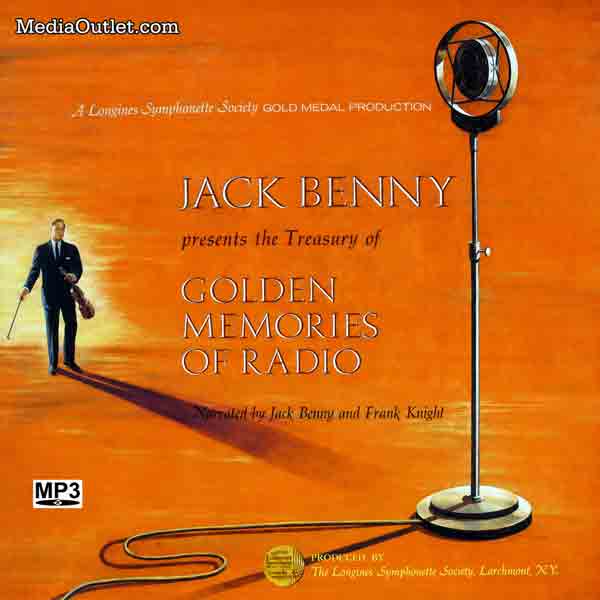
November 2, 1920: Radio Broadcasting
History: Elections: Elections In The United States: The 1920
United States Presidential Election: -- KDKA of Pittsburgh,
Pennsylvania begins broadcasting as the world's first commercially
licensed radio station with the first broadcast of United States
presidential election returns during The 1920 United States
Presidential Election. The election night broadcast was
transmitted on a wavelength of 550 meters (545 kHz). The announcer
for the election night broadcast was a publicity department staff
member, Leo Rosenberg. Frank Conrad stood by at his home station,
ready to take over using his 8XK transmitter if the East
Pittsburgh transmitter failed, but the effort was successful, with
one newspaper report noting that: "The returns by wireless
telephone, which were transmitted from the Westinghouse
international radio station at East Pittsburgh, were exceptionally
clear and distinct. The service was utilized by many amateurs to
entertain gatherings at their various stations. Between
announcements of the returns radiophone music was transmitted,
which added much to the entertainment." Encouraged by the
success of KDKA, by the end of 1921 the station's owner, The
Westinghouse Electric & Manufacturing Company, established
stations in three additional major population centers, including
WJZ in Newark, New Jersey (now WABC in New York City); WBZ,
originally in Springfield, Massachusetts (now Boston); and KYW,
originally in Chicago, Illinois (now Philadelphia). The 1920
United States Presidential Election was the 34th quadrennial
presidential election, held on Tuesday, November 2, 1920. In the
first election held after the end of World War I and the first
election after the ratification of the Nineteenth Amendment, which
gave women the right to vote for the first time. The Republican
ticket of Senator Warren G. Harding of Ohio and Governor Calvin
Coolidge of Massachusetts defeated the Democratic ticket of
Governor James M. Cox of Ohio and Assistant Secretary of the Navy
Franklin D. Roosevelt. On Sale Until Midnight Tonight PT!
https://store.earthstation1.com/jack-benny-presents-golden-memories-of-radio-6-album-set-mp3-63.html
Today's
EarthStation1.com 15% (Or More!) Off Commemorative Memorial Title:
An Ocean Apart: US-UK Relations TV Series + Profumo Affair MP4 DVD
Set
Today, November 2, 2026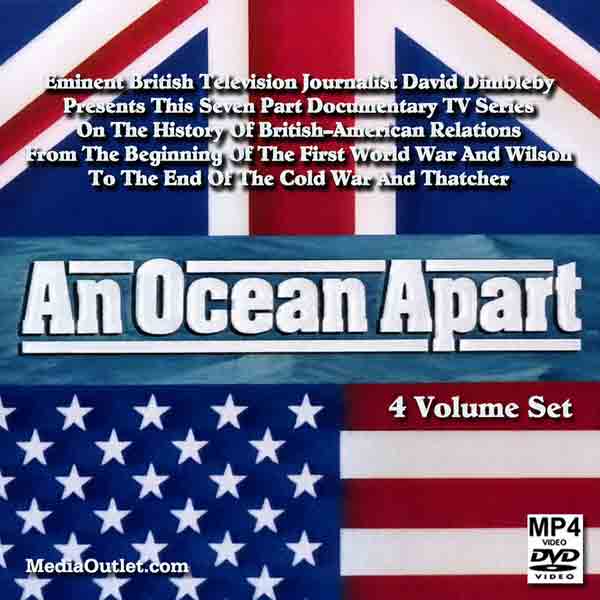
November 2: 1936: Aesthetics: Performing
Arts: Premieres: Television Premieres: British Television
Premieres: -- The British Broadcasting Corporation initiates the
BBC Television Service, the world's first regular,
"high-definition" (then defined as at least 200 lines)
service. Renamed BBC1 in 1964, the channel still runs to this day.
Its foundation served a covert purpose: to initiate a
manufacturing base for cathode ray tubes intended to be used as
part of the still secret RADAR program in the eventuality of war
with Nazi Germany. It proved a wise investment, as the
manufacturing infrastructure created to produce television sets
were able to produce and adequate number of cathode tube screens
to meet the needs of British RADAR equipment from the very
beginning of World War II: BBC Television is a service of the BBC.
The corporation has operated public television services in the
United Kingdom under the terms of a royal charter since 1927. It
produced television programmes from its own studios from 1932,
although the start of its regular service of television broadcasts
is dated to November 2, 1936. The BBC's domestic television
channels have no commercial advertising and collectively they
accounted for more than 30% of all UK viewing in 2013. The
services are funded by a television licence. BBC One is a British
free-to-air public broadcast television network owned and operated
by the BBC. It is the corporation's flagship network and is known
for broadcasting mainstream programming, which includes BBC News
television bulletins, primetime drama and entertainment, and live
BBC Sport events. It was launched on November 2 1936 as the BBC
Television Service and was the world's first regular television
service with a high level of image resolution. It was renamed BBC
TV in 1960 and used this name until the launch of the second BBC
channel, BBC2, in 1964. The main channel then became known as
BBC1. The channel adopted the current spelling of BBC One in 1997.
On Sale Until Midnight Tonight PT!
https://store.earthstation1.com/an-ocean-apart-us-uk-relations-tv-series-profumo-affair-mp4-dvd-set.html
Today's
EarthStation1.com 15% (Or More!) Off Commemorative Memorial Title:
Fiorello La Guardia DVD Biography Documentaries DVD MP4 Video
Download
Today, November 2, 2026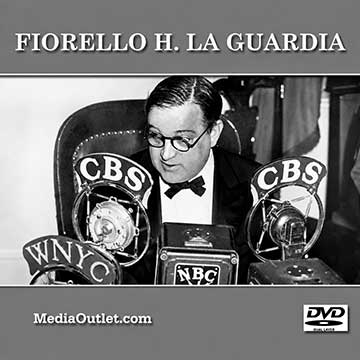
November 2, 1937: Elections: Elections In
The United States: The 1937 New York City Mayoral Election: --
Incumbent Mayor Fiorello La Guardia is elected to a second term as
mayor of New York City. A Republican candidate, he was reelected
with 60.09% of the vote, defeating the Democratic candidate
Jeremiah T. Mahoney, a lawyer and former New York Supreme Court
justice, as well as other, third party candidates. La Guardia was
also the nominee of the American Labor Party, and additionally ran
on the City Fusion and Independent Progressive ballot lines, while
Mahoney ran on the Trade Union and Anti-Communist party lines.
Fiorello La Guardia, Italian-Jewish American lawyer and
politician, 99th Mayor of New York City for three terms from 1934
to 1945 as a Republican (December 11, 1882 - September 20, 1947)
was born Fiorello Enrico La_Guardia, in Greenwich Village, New
York City. Fiorello Henry La Guardia's father, Achille La Guardia,
was a Catholic native of Cerignola, Apulia, Italy, an Italian
immigrant to the United States and a non-practicing Catholic. His
mother, Irene Luzzatto Coen, was a Jewish native of Trieste, then
part of the Austro-Hungarian Empire, also an immigrant to the
United States. His maternal grandmother Fiorina (Luzzatto) Coen
was a Luzzatto, a member of the prestigious Italian Jewish family
of scholars, kabbalists, and poets. La Guardia's parents met and
married in Trieste. Fiorello was raised an Episcopalian and
practiced that religion all his life. His middle name "Enrico"
was eventually anglicized to "Henry". Fiorello La
Guardia was elected to Congress in 1916 and 1918, and again from
1922 through 1930. Irascible, energetic, and charismatic, he
craved publicity and is acclaimed as one of the greatest mayors in
American history. Only five feet, two inches (1.57 m) tall, he was
called "the Little Flower" (Fiorello is Italian for
"little flower"). La Guardia, a Republican who appealed
across party lines, was very popular in New York during the 1930s.
As a New Dealer, he supported President Franklin D. Roosevelt, a
Democrat, and in turn Roosevelt heavily funded the city and cut
off patronage for La Guardia's enemies. La Guardia revitalized New
York City and restored public faith in City Hall. He unified the
transit system, directed the building of low-cost public housing,
public playgrounds, and parks, constructed airports, reorganized
the police force, defeated the powerful Tammany Hall political
machine, and reestablished employment on merit in place of
patronage jobs. La Guardia was a domineering leader who verged on
authoritarian but whose reform politics were carefully tailored to
address the sentiments of his diverse constituency. He defeated a
corrupt Democratic machine, presided during a depression and a
world war, made the city the model for New Deal welfare and public
works programs, and championed immigrants and ethnic minorities.
He succeeded with the support of a sympathetic president. He
secured his place in history as a tough-minded reform mayor who
helped clean out corruption, brought in gifted experts, and fixed
upon the city a broad sense of responsibility for its own
citizens. His administration engaged new groups that had been kept
out of the political system, gave New York its modern
infrastructure, and raised expectations of new levels of urban
possibility. Fiorello La Guardia dief of pancreatic cancer in his
home at 5020 Goodridge Avenue, in the Fieldston neighbourhood of
Riverdale, Bronx, aged 64. La Guardia is interred at Woodlawn
Cemetery in the Bronx in a simple grave that reads "La
Guardia. Statesman | Humanitarian". On Sale Until Midnight
Tonight PT!
https://store.earthstation1.com/fiorello-laguardia-dvd-biography-documentary.html
Today's
EarthStation1.com 15% (Or More!) Off Commemorative Memorial Title:
Howard Hughes Biography Documentary DVD, Video Download, USB Drive
Today, November 2, 2026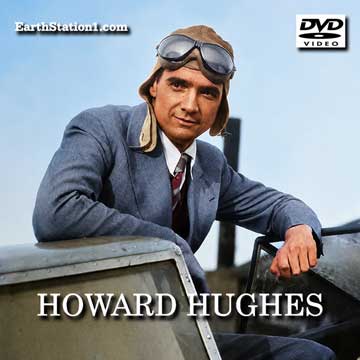
November 2, 1947: Aviation: The History
Of Aviation: The History Of Military Aviation: Maiden Flights:
Military Aviation Maiden Flights: -- The first and only flight of
Howard Hughes' Hughes H-4 Hercules "Spruce Goose" flying
boat occurred in Long Beach Harbor, California. It flew about a
mile at an altitude of 70 feet. Costing 25M USD, the 200-ton
plywood eight-engine Hercules was the world's largest airplane,
designed, built and flown by Hughes. It later became a tourist
attraction alongside the Queen Mary ship at Long Beach and has
since been moved to Oregon. The Hughes H-4 Hercules (commonly
known as the Spruce Goose; registration NX37602) is a prototype
strategic airlift flying boat designed and built by the Hughes
Aircraft Company. Intended as a transatlantic flight transport for
use during World War II, it was not completed in time to be used
in the war. The aircraft made only one brief flight on November 2,
1947, and the project never advanced beyond the single example
produced. Built from wood because of wartime restrictions on the
use of aluminum and concerns about weight, the aircraft was
nicknamed the Spruce Goose by critics, although it was made almost
entirely of birch. The Hercules is the largest flying boat ever
built, and it had the largest wingspan of any aircraft that had
ever flown until the Scaled Composites Stratolaunch first flew on
April 13, 2019. The aircraft remains in good condition. After
having been displayed to the public in Long Beach, California,
from 1980 to 1991, it is now on display at the Evergreen Aviation
& Space Museum in McMinnville, Oregon, United States. On Sale
Until Midnight Tonight PT!
https://store.earthstation1.com/howard-hughes-biography-documentary-dvd-video-download-usb-flash-drive.html
Today's
EarthStation1.com 15% (Or More!) Off Commemorative Memorial Title:
The Great Upset Of '48 Truman Vs Dewey Election MP4 Download Or
DVD
Today, November 2, 2026
November 2, 1948: Elections: Elections In
The United States: The 1948 United States Presidential Election:
-- The 41st quadrennial presidential election is held and results
in one of the greatest election upsets in American history when
incumbent President Harry S. Truman, the Democratic nominee,
defeated heavily favored Republican Governor of New York Thomas E.
Dewey, and third-party candidates, becoming the third president to
succeed to the presidency upon his predecessor's death and be
elected to a full term. Truman had been elected vice president in
the 1944 election and succeeded to the presidency in April 1945
upon the death of Franklin D. Roosevelt. He won his party's
nomination at the 1948 Democratic National Convention only after
defeating attempts to drop him from the ticket. The convention's
civil rights plank caused a walk-out by several Southern
delegates, who launched a third-party "Dixiecrat" ticket
led by Governor Strom Thurmond of South Carolina. The Dixiecrats
hoped to win enough electoral votes to force a contingent election
in the House of Representatives, where they could extract
concessions from either Dewey or Truman in exchange for their
support. Truman also faced a challenge from his party in the form
of former Vice President Henry A. Wallace, who launched the
Progressive Party and challenged Truman's confrontational Cold War
policies. Dewey, who was the leader of his party's liberal eastern
wing and had been the 1944 Republican presidential nominee,
defeated Senator Robert A. Taft and other challengers at the 1948
Republican National Convention. This was the first election to
have primary and general election debates with Dewey debating
Harold Stassen in the Republican primary while Norman Thomas
debated Farrell Dobbs in the general election. Truman's feisty
campaign style energized his base of traditional Democrats,
consisting of most of the white South, as well as labor unions,
and Catholic and Jewish voters; he also fared surprisingly well
with Midwestern farmers. Dewey ran a low-risk campaign and largely
avoided directly criticizing Truman. With the three-way split in
the Democratic Party, and with Truman's low approval ratings,
Truman was widely considered to be the underdog in the race, and
virtually every prediction (with or without public opinion polls)
indicated that Dewey would win the election. Defying these
predictions, Truman won the election with 303 electoral votes to
Dewey's 189. Truman also won 49.6% of the popular vote compared to
Dewey's 45.1%, while the third-party candidacies of Thurmond and
Wallace each won less than 3% of the popular vote, with Thurmond
carrying four southern states. Truman's surprise victory was the
fifth consecutive presidential win for the Democratic Party, the
longest winning streak for the Democrats, and the longest for
either party since the 1880 election. With simultaneous success in
the 1948 congressional elections, the Democrats regained control
of both houses of Congress, which they had lost in 1946. Thus,
Truman's election confirmed the Democratic Party's status as the
nation's majority party. This was the last presidential election
before the ratification of the Twenty-second Amendment in 1951,
limiting the number of times a person may be elected president. On
Sale Until Midnight Tonight PT!
https://store.earthstation1.com/the-great-upset-of-3948-dvd-truman-vs-dewey-elec3948.html
Today's
EarthStation1.com 15% (Or More!) Off Commemorative Memorial Title:
Eyes On The Prize II: America At The Racial Crossroads DVD MP4 USB
Today, November 2, 2026
November 2, 1954: Elections: Elections In
The United States: The 1946 United States House Of Representatives
Elections: The 1954 Michigan 13th Congressional District Election:
First African Americans: -- Charles Diggs is elected Michigan's
first Black congressman, winning in the general election for
Michigan's 13th congressional district to become its
representative in the 84th Congress. Charles Diggs, known
familiarly as Charlie Diggs, soldier, funeral director, Michigan
State Senator, Representative from The State Of Michigan, Civil
Rights activist, founding member and first chairman of the
Congressional Black Caucus (December 2, 1922 - August 24, 1998)
was born Charles Coles Diggs Jr. in Detroit, Michigan, the only
child of Mayme E. Jones Diggs, and Charles Diggs Sr.. He was
rooted in his family's business, the House Of Diggs, at one time
was said to be Michigan's largest funeral home, founded by his
father Charles C. Diggs, Sr. in 1921. He attended the University
of Michigan, Detroit College of Law (1952-52), and Fisk
University. He served in the United States Army from 1943 to 1945.
After his discharge, Diggs worked as a funeral director at The
House Of Diggs. He served as a member of the Michigan Senate from
the 3rd district 1951-54, just as his father had from 1937 to
1944. A member of the Democratic Party, he was elected as
Michigan's 13th District Represetative to thirteen Congresses,
serving from January 3, 1955 until June 3, 1980. Diggs was an
early and highly visible participant in the civil rights movement
{The American Civil Rights Movement (1954-1968)}. In September
1955, the Michigan Representative garnered national attention when
he attended the trial of the two white Mississippians accused of
murdering Emmett Till. He was elected the first chairman of the
Congressional Black Caucus, which on January 4, 1969 he was also
one of the main founders of. While chairman, Diggs successfully
led a caucus boycott of President Nixon's State of the Union
Address, following Nixon's refusal to meet to discuss issues
relevant to African Americans. This and similar work contributed
to Diggs being named on the Master List Of Nixon Political
Opponents, colloquially known as "The Nixon Enemies List".
He was a staunch and outspoken critic of the apartheid regime in
South Africa. On March 23, 1978, Diggs was indicted by a federal
grand jury on 35 charges of mail fraud and charged with taking
kickbacks from staff whose salaries he raised. He was convicted in
United States of America v. Charles C. Diggs, Jr. on October 7,
1978, on 11 counts of mail fraud and filing false payroll forms.
Diggs insisted he had done nothing wrong, and was overwhelmingly
re-elected while awaiting sentencing. He was censured by the House
on July 31, 1979, and resigned from Congress June 3, 1980. He was
sentenced to three years in prison and served 14 months. Charles
Diggs died of a stroke aged 75 at Greater Southeast Community
Hospital in Washington, D.C. He is interred at Detroit Memorial
Park in Warren, Michigan. On Sale Until Midnight Tonight PT!
https://store.earthstation1.com/eyes-on-the-prize-ii-dvd-set-4-discs-complete-2nd-seri42.html
Today's
EarthStation1.com 15% (Or More!) Off Commemorative Memorial Title:
The Cuban Missile Crisis: At The Brink + Bonus MP4 Download DVD
Today, November 2, 2026
November 2, 1962: Cuba: The History Of
Cuba: The Aftermath Of World War II: The Cold War: The Cold War
(1962-1979): The Cuban Cold War: The Cuban Missile Crisis: --
President John F. Kennedy, in an Address To The Nation, announces
during Oval Office Address on television that "the Soviet
bases in Cuba are being dismantled, their missiles and related
equipment being crated, and the fixed installations at these sites
are being destroyed.". On October 28, 1962, a nuclear World
War III was narrowly averted with the announcement by Nikita
Khrushchev that the Soviet government was halting construction of
bases in Cuba and would remove offensive missiles. President
Kennedy immediately accepted the offer, then lifted the U.S. naval
blockade of Cuba. On October 22, 1962, President delivered an Oval
Office Address on television, an Address To The Nation to inform
Americans of the existence of Soviet missiles in Cuba. The
President demanded their removal and announced a naval
"quarantine" of Cuba. Nuclear war between the United
States and the Soviet Union was at that point imminent, and it
remained so until six days later, when the Soviets announced via
Radio Moscow that they would remove the weapons. When President
Kennedy was informed of Soviet medium range R-12 Dvina theatre
ballistic missiles (NATO reporting name: SS-4 Sandal) and their
launch facilities having been installed in Cuba, he then convened
a meeting of the nine members of the National Security Council and
five other key advisers in a group that became known as the
Executive Committee of the National Security Council (EXCOMM).
After consultation with them, Kennedy ordered a naval blockade on
October 22 to prevent further missiles from reaching Cuba. The US
announced it would not permit offensive weapons to be delivered to
Cuba and demanded that the weapons already in Cuba be dismantled
and returned to the Soviet Union. After several days of tense and
dangerous negotiations, an agreement was reached between Kennedy
and Khrushchev. Publicly, the Soviets would dismantle their
offensive weapons in Cuba and return them to the Soviet Union,
subject to United Nations verification, in exchange for a US
public declaration and agreement to avoid invading Cuba again.
Secretly, the United States agreed that it would dismantle all
US-built Jupiter MRBMs, which had been deployed in Turkey against
the Soviet Union; there has been debate on whether or not Italy
was included in the agreement as well. When all offensive missiles
and Ilyushin Il-28 light bombers had been withdrawn from Cuba, the
blockade was formally ended on November 21, 1962. The negotiations
between the United States and the Soviet Union pointed out the
necessity of a quick, clear, and direct communication line between
the two Superpowers. As a result, the Moscow-Washington hotline
was established. A series of agreements later reduced US-Soviet
tensions for several years until both parties began to build their
nuclear arsenals even further. On Sale Until Midnight Tonight PT!
https://store.earthstation1.com/the-cuban-missile-crisis-at-the-brink-dvd-mp4-download-usb-driv4.html
Today's
EarthStation1.com 15% (Or More!) Off Commemorative Memorial Title:
Vietnam: The Ten Thousand Day War TV Series DVD, Video Download,
USB
Today, November 2, 2026
November 2, 1963: #DOTD: The Aftermath Of
World War II: The Cold War: The Cold War In Asia: The Indochina
Wars: The Vietnam War (The Second Indochina War, The Vietnam
Conflict, The Resistance War Against America): The United States
In The Vietnam War: Protests In Vietnam: The Buddhist Crisis
(May-November, 1963) (Vietnamese: Bien Co Phat Giao): The Xa Loi
Pagoda Raids (Vietnamese Pronunciation: SAH-loy): The 1963 South
Vietnamese Coup: -- South Vietnamese President Ngo Dinh Diem,
along with his brother Ngo Dinh Nhu, #dies on All Souls' Day when
they are brutally assassinated in a military coup. The day before,
President Ngo Dinh Diem was deposed by a group of Army of the
Republic of Vietnam officers who disagreed with his handling of
both the Buddhist crisis and the Viet Cong threat to the regime.
The Kennedy administration had been aware of the coup planning,
but Cable 243 from the United States Department of State to US
Ambassador to South Vietnam Henry Cabot Lodge, Jr., stated that it
was US policy not to try to stop it. Lucien Conein, the Central
Intelligence Agencys liaison between the US embassy and the coup
planners, told them that the US would not intervene to stop it.
Conein also provided funds to the coup leaders. The coup was led
by General Duong Van Minh and started on 1 November. It proceeded
smoothly as many loyalist leaders were captured after being caught
off-guard and casualties were light. Diem was captured and
executed the next day along with his brother and adviser Ngo Dinh
Nhu. On Sale Until Midnight Tonight PT!
https://store.earthstation1.com/vietnam-the-10000-day-war-4-dual-layer-dvds-all-13-10000413.html
Today's
EarthStation1.com 15% (Or More!) Off Commemorative Memorial Title:
LBJ 1991 TV Documentary Series Lyndon Johnson DVD Download USB
Drive
Today, November 2, 2026
November 2, 1967: The Aftermath Of World
War II: The Cold War: The Cold War In Asia: The Indochina Wars:
The Vietnam War (The Second Indochina War, The Vietnam Conflict,
The Resistance War Against America): The United States In The
Vietnam War: "The Wise Men" -- US President Lyndon B.
Johnson and "The Wise Men" conclude that the American
people should be given more optimistic reports on the progress of
the war. With the war still arguably in a stalemate and in light
of the widespread disapproval of the conflict, Johnson convened a
group called "The Wise Men" for a fresh, in-depth look
at the war: Dean Acheson, Gen. Omar Bradley, George Ball, Mac
Bundy, Arthur Dean, Douglas Dillon, Abe Fortas, Averell Harriman,
Henry Cabot Lodge, Robert Murphy and Max Taylor. At that time
McNamara, reversing his position on the war, recommended that a
cap of 525,000 be placed on the number of forces deployed and that
the bombing be halted, since he could see no success. Johnson was
quite agitated by this recommendation and McNamara's resignation
soon followed. With the exception of George Ball, the "Wise
Men" all agreed the administration should "press
forward". On Sale Until Midnight Tonight PT!
https://store.earthstation1.com/lbj-1991-tv-documentary-series-lyndon-johnson-dvd-download-usb-d1991.html
Today's
EarthStation1.com 15% (Or More!) Off Commemorative Memorial Title:
Television: A History Of Broadcast TV DVD MP4 Download USB Drive
Today, November 2, 2026
November 2 (no year given): #BOTD: #HBD!
Cookie Monster is #born according to "Sesame Street Episode
0484: Cookie Monster's Birthday", which aired Season 4
(1972-1973) on March 1, 1973. In Scene 4, Cookie Monster receives
many pieces of mail, which he assumes are birthday cards because
today is his birthday. Everyone offers to throw him a party and
quietly begin planning it out. Cookie eavesdrops and gets excited
to hear about all the cookies they plan on giving him. In Scene 6,
Cookie Monster approaches Oscar and prods in him into giving him a
birthday gift. Cookie gives him clues as to what he would like -
it starts with C, is round, and you eat it. Oscar produces a crab,
then a clock, and finally a cactus. Cookie makes it clear what he
wants and Oscar gives him some cookies at last (he was using them
as bookends). Cookie Monster is a Muppet character on the
long-running children's television show Sesame Street. He is best
known for his voracious appetite and his famous eating phrases,
such as "Me want cookie!", "Me eat cookie!"
(or simply "COOKIE!"), and "Om nom nom nom"
(said through a mouth full of food). He eats almost anything,
including normally inedible objects. However, as his name
suggests, his preferred food is cookies. Chocolate chip cookies
are his favorite kind. In a song in 2004, Cookie Monster revealed
that, before he ate his first cookie, he believed his name was Sid
or Sidney. Despite his voracious appetite for cookies, Cookie
Monster shows awareness of healthy eating habits for young
children and also enjoys fruits and eggplant. He is known to have
a mother, a younger sister, and an identically-designed cousin
(who does not like cookies). All three share his characteristic
navy blue fur and "googly eyes." He also has a father,
who appeared in a Monsterpiece Theater sketch promoting energy
conservation, water conservation and environmentalism. Both Cookie
Monster's mother and father share his enormous appetite and
craving for cookies. He and his Sesame Street friends are popular
motifs on T-shirts. On Sale Until Midnight Tonight PT!
https://store.earthstation1.com/television-1988-tv-documentary-series-8-shows-4-dual-laye198884.html
Today's
EarthStation1.com 15% (Or More!) Off Commemorative Memorial Title:
Presidential Campaign TV Ads 1952-1992 MP4 Video Download 4 DVD
Set
Today, November 2, 2026
November 2, 1976: Elections: Elections In
The United States: The 1976 United States Presidential Election:
-- The 48th quadrennial presidential election is held and results
in Democrat Jimmy Carter, former Governor of Georgia, defeating
incumbent Republican president Gerald Ford in a narrow victory.
Ford ascended to the presidency when Richard Nixon resigned in
1974 in the wake of the Watergate scandal, which badly damaged the
Republican Party and its electoral prospects. Ford promised to
continue Nixon's political agenda and govern as a moderate
Republican, causing considerable backlash from the conservative
wing of his party. This spurred former California governor Ronald
Reagan to mount a significant challenge against him in the
Republican primaries, in which Ford narrowly prevailed. Carter was
unknown outside of his home state of Georgia at the start of the
Democratic primaries, but he emerged as the front-runner after his
victories in the first set of primaries. Campaigning as a
political moderate within his own party and as a Washington, D.C.
outsider, Carter defeated numerous opponents to clinch the
Democratic nomination. Ford pursued a "Rose Garden strategy"
in which he sought to portray himself as an experienced leader
focused on fulfilling his role as chief executive. On the other
hand, Carter emphasized his status as a reformer who was
"untainted" by Washington. Saddled with a poor economy,
the fall of South Vietnam, and his unpopular pardon of Richard
Nixon, Ford trailed by a wide margin in polls taken after Carter's
formal nomination in July 1976. Ford's polling rebounded after a
strong performance in the first presidential debate, and the race
was close on election day. Carter won a majority of the popular
and electoral votes. He was able to carry several Midwestern and
Northeastern swing states, as well as most states in the
Democratic-dominated region of the South. Ford dominated the
Western states. Carter's victory at the polls was due in part to
the backlash against the Watergate scandal that still was deeply
hurting Republican candidates. Ford became the only vice-president
to become president and subsequently fail to win election for a
term in his own right. As of 2020, this is also the last election
in which the Democratic candidate won the majority of states in
the South, carrying the states of Alabama, Mississippi, South
Carolina, and Texas (mainly due to Carter's southern roots), and
the most recent election in which the losing candidate carried
more states than the winning candidate. On Sale Until Midnight
Tonight PT!
https://store.earthstation1.com/presidential-campaign-tv-ads-19521984-dvds-2-dual-la195219842.html
Today's
EarthStation1.com 15% (Or More!) Off Commemorative Memorial Title:
Christabel 1988 Christabel Bielenberg Bio Elizabeth Hurley DVD MP4
USB
Today, November 2, 2026
November 2, 2003: #DOTD: #RIP: Christabel
Bielenberg, British writer who described her experiences living in
Germany with her husband, the German lawyer, Peter Bielenberg,
during the Second World War in two books: The Past is Myself
(1968) and The Road Ahead (b. June 18, 1909) #dies aged 94 at her
and her family's rural home in Tullow, County Carlow, Ireland. Her
burial details are not publicly disclosed. Christabel Bielenberg
was born Christabel Mary Burton in Totteridge, Hertfordshire to
Anglo-Irish parents. She was educated at St Margaret's School,
Bushey, Hertfordshire. Her mother, Christabel Harmsworth, was the
sister of Lords Northcliffe, Harmsworth, and Rothermere.
Christabel won a scholarship to Somerville College, Oxford, but
decided instead to study music in Germany. While there she met
Peter Bielenberg (1911-2001), two years her junior, who was
studying law with a view to joining his father's practice in
Hamburg. They married in 1934 and she took German citizenship,
which required her to relinquish her British citizenship. The
Bielenbergs lived initially in Hamburg, then moved to Berlin and
had three sons, Nicholas, Christopher, and John. The heavy Allied
bombing raids led Mrs Bielenberg and her children to leave the
city, and they eventually settled in the village of Rohrbach, near
Furtwangen im Schwarzwald, in the Black Forest. Both Christabel
and Peter Bielenberg were opposed to Nazism and following Hitler's
rise to power in 1933, participated in anti-Nazi activities. Peter
Bielenberg was a close friend of Adam Von Trott zu Solz, who was
involved in the Stauffenberg bomb plot against Hitler of 1944, and
as a result of his suspect political views and this close
association he was arrested, interrogated, and imprisoned in
Ravensbruck concentration camp following the failure of the plot.
In an effort to secure his release, Christabel Bielenberg asked to
be interviewed by the Gestapo in order to convince them of her and
her husband's political naivety and innocence. She was successful
and he was released to a punishment unit but mistakenly allowed
leave before joining it. He managed to slip away and remained in
hiding near his family until the fighting ended. After the war,
she returned to Britain with her children, later visiting Germany
as a foreign correspondent for The Observer. In 1948, the family
settled in Tullow, County Carlow, Ireland, buying a dilapidated
farm called "Munny House", which they transformed into a
commercial success. As well as writing her autobiography she
became involved with the Irish Peace Marches of the 1970s and
lectured in Germany. She was made a Commander of the German
Federal Order of Merit and was also awarded a Gold Medal of Merit
by the European Parliament. Her experiences during the Second
World War were made into the BBC television drama serial
Christabel (1988), adapted from her memoir by Dennis Potter.
Elizabeth Hurley starred in the title role. In 1974 Christabel
described her experiences of attempting to shelter Jews hiding
from persecution in the television series The World at War.
Christabel Bielenberg sat for sculptor Alan Thornhill for a
portrait in clay. The correspondence file relating to the
Bielenberg bust is held in the archive of the Henry Moore
Foundation's Henry Moore Institute in Leeds and the terracotta
remains in the collection of the artist. She had three sons,
Nicholas, John and Christopher ("Kim"). Nick's son Andy
is an historian at University College Cork; Nick's son Kim works
as a journalist in Dublin. Nicholas's wife was Charlotte, daughter
of Fritz-Dietlof Von der Schulenburg. On Sale Until Midnight
Tonight PT!
https://store.earthstation1.com/christabel-dvd-1988-elizabeth-hurley-stephen-dil1988.html
Today's
EarthStation1.com 15% (Or More!) Off Commemorative Memorial Title:
Mr. President US Presidential History Radio w/Edward Arnold CD MP3
USB
Today, November 2, 2026
November 2, 1852: Elections: Elections In
The United States: The 1852 United States Presidential Election:
-- The 17th quadrennial presidential election is held, resulting
in Democrat Franklin Pierce defeating Whig nominee General
Winfield Scott. A third party candidate from the Free Soil party,
John P. Hale, also ran and came in third place, but got no
electoral votes. Incumbent Whig President Millard Fillmore had
succeeded to the presidency in 1850 upon the death of President
Zachary Taylor. Fillmore endorsed the Compromise Of 1850 and
enforced the Fugitive Slave Law. This earned Fillmore Southern
voter support and Northern voter opposition. On the 53rd ballot of
the sectionally divided 1852 Whig National Convention, Scott
defeated Fillmore for the nomination. Democrats divided among four
major candidates at the 1852 Democratic National Convention. On
the 49th ballot, dark horse candidate Franklin Pierce won
nomination by consensus compromise. The Free Soil Party, a third
party opposed to the extension of slavery in the United States and
into the territories, nominated New Hampshire Senator John P.
Hale. With few policy differences between the two major
candidates, the election became a personality contest. Though
Scott had commanded in the Mexican-American War, Pierce also
served. Scott strained Whig Party unity as his anti-slavery
reputation gravely damaged his campaign in the South. A group of
Southern Whigs and a separate group of Southern Democrats each
nominated insurgent tickets, but both efforts failed to attract
support. Pierce and running mate William R. King won a comfortable
popular majority, carrying 27 of the 31 states. Pierce won the
highest share of the electoral vote since James Monroe's
uncontested 1820 re-election. The Free Soil Party regressed to
less than five percent of the national popular vote, down from
more than ten percent in 1848, while overwhelming defeat and
disagreement about slavery soon drove the Whig Party to
disintegrate. Anti-slavery Whigs and Free Soilers would ultimately
coalesce into the new Republican Party, which would quickly become
a formidable movement in the free states. Not until 1876 would
Democrats again win a majority of the popular vote for president,
and not until 1932 would they win a majority in both the popular
vote and the electoral college. On Sale Until Midnight Tonight PT!
https://store.earthstation1.com/mister-president-historical-old-time-radio-mp3-c3.html
Today's
EarthStation1.com 15% (Or More!) Off Commemorative Memorial Title:
Portraits Of American Presidents Nos. 1-42 TV Series MP4 Download
DVD
Today, November 2, 2026
November 2, 1880: Elections: Elections In
The United States: The 1880 United States Presidential Election:
-- The 24th quadrennial presidential election is held, resulting
in Republican nominee James A. Garfield defeating Winfield Scott
Hancock of the Democratic Party. The voter turnout rate was one of
the highest in the nation's history. Garfield was assassinated
during his first year in office, and he was succeeded by his vice
president, Chester A. Arthur. Incumbent President Rutherford B.
Hayes did not seek re-election. After the longest convention in
the party's history, the factionalized Republicans chose
Representative Garfield of Ohio as their standard-bearer. The
Democratic Party chose General Winfield Scott Hancock of
Pennsylvania as their nominee. The dominance of the two major
parties began to fray as an upstart left-wing party, the Greenback
Party, nominated another Civil War general for president, Iowa
Congressman James B. Weaver. In a campaign fought mainly over
issues of Civil War loyalties, tariffs, and Chinese immigration,
Garfield narrowly won both the electoral and popular vote. He and
Hancock each took just over 48 percent of the popular vote, while
Weaver and two other minor candidates, Neal Dow and John W.
Phelps, together made up the remainder. In the end, the popular
vote totals of the two main candidates were separated by 1,898
votes (0.11%), the smallest victory in the national popular vote
ever recorded. In the electoral college, however, Garfield's
victory was much larger; he won the tipping point state of New
York by 21,033 votes (1.91%). Hancock's sweep of the Southern
states was not enough for victory, but it cemented his party's
dominance of the region for generations. This was the last of six
consecutive presidential election victories for the Republican
Party. It was also the first in which people in every state were
able to vote directly for presidential electors. On Sale Until
Midnight Tonight PT!
https://store.earthstation1.com/portraits-of-american-presidents-nos-142-tv-series-mp4-download1424.html
Today's
EarthStation1.com 15% (Or More!) Off Commemorative Memorial Title:
The Roaring Twenties: 1920s History Documentary DVD, MP4, USB
Stick
Today, November 2, 2026
November 2, 1920: Elections: Elections In
The United States: The 1920 United States Presidential Election:
-- Warren G. Harding is elected 29th President Of The United
States during the first presidential election whose voting returns
were broadcast on radio. Warren Gamaliel Harding (November 2, 1865
- August 2, 1923) was born in Blooming Grove, Ohio. Nicknamed
"Winnie" as a small child, he was the eldest of eight
children born to George Tryon Harding (1843-1928; usually known as
Tryon) and Phoebe Elizabeth (nee Dickerson) Harding (1843-1910). A
member of the Republican Party, Harding was one of the most
popular U.S. presidents up to that point. His death came as a
great shock to the nation; he was liked and admired, and both the
press and public had followed his illness closely and been
reassured by his apparent recovery. His body was carried to his
train in a casket for a journey across the nation followed closely
in the newspapers. Nine million people lined the tracks as his
body was taken from San Francisco to Washington, D.C., where he
lay in state at the United States Capitol rotunda. After funeral
services there, the body was transported to Marion, Ohio, for
burial. After his death, a number of scandals, including Teapot
Dome, came to light, as did his extramarital affair with Nan
Britton, with whom he fathered a daughter, Elizabeth, out of
wedlock; each scandal eroded his popular regard. Harding is often
rated as one of the worst presidents in historical rankings.
Harding lived in rural Ohio all his life, except when political
service took him elsewhere. As a young man, he bought The Marion
Star and built it into a successful newspaper. In 1899, he was
elected to the Ohio State Senate; he spent four years there, then
was elected lieutenant governor. He was defeated for governor in
1910, but was elected to the U.S. Senate in 1914. He ran for the
Republican nomination for president in 1920, and he was considered
a long shot until after the convention began. The leading
candidates could not gain the needed majority, and the convention
deadlocked. Harding's support gradually grew until he was
nominated on the tenth ballot. He conducted a front porch
campaign, remaining for the most part in Marion and allowing the
people to come to him, and running on a theme of a return to
"normalcy", a phrase he is credited with coining, of the
pre-World War I period. He won in a landslide over Democrat James
M. Cox and the then imprisoned Socialist Party candidate Eugene
Debs and became the first sitting senator to be elected president.
Harding appointed a number of well-regarded figures to his
cabinet, including Andrew Mellon at Treasury, Herbert Hoover at
the Department of Commerce, and Charles Evans Hughes at the State
Department. A major foreign policy achievement came with the
Washington Naval Conference of 1921-1922, in which the world's
major naval powers agreed on a naval limitations program that
lasted a decade. Harding released political prisoners who had been
arrested for their opposition to World War I. However, his cabinet
members Albert B. Fall (Interior Secretary) and Harry Daugherty
(Attorney General) were each later tried for corruption in office;
these and other scandals greatly damaged Harding's posthumous
reputation. Most of the scandals that have marred the reputation
of Harding's administration did not emerge until after his death,
scandals which included the Teapot Dome Scandal and the Justice
Department's complicity with it, and the Veterans' Bureau Scandal,
which was known to Harding in January 1923 but, according to Trani
and Wilson, "the president's handling of it did him little
credit"; Harding allowed the corrupt director of the bureau,
Charles R. Forbes, to flee to Europe, though he later returned and
served prison time. Harding had learned that Daugherty's factotum
at the Justice Department, Jess Smith, was involved in corruption.
The president ordered Daugherty to get Smith out of Washington and
removed his name from the upcoming presidential trip to Alaska.
Smith committed suicide on May 30, 1923. It is uncertain how much
Harding knew about Smith's illicit activities. Murray noted that
Harding was not involved in the corruption and did not condone it.
Hoover accompanied Harding on the Western trip and later wrote
that Harding asked then what Hoover would do if he knew of some
great scandal, whether to publicize it or bury it. Hoover replied
that Harding should publish and get credit for integrity, and
asked for details. Harding stated that it had to do with Smith
but, when Hoover enquired as to Daugherty's possible involvement,
Harding refused to answer. Along with this, his administration
having been tainted by the Teapot Dome political scandal, his
sudden death has been a matter of speculation; on August 2, 1923
Harding died suddenly of a heart attack in a hotel in San
Francisco while on a Western speaking tour, and was succeeded the
next day as President by Calvin Coolidge. Rumors hold that he
succumbed to poison by his wife, Florence; was accidentally
prescribed stimulating medicines resulting in death; or was a
victim of food poisoning resulting in death. Mrs. Harding died 15
months later on November 22, 1924 in Marion, Ohio. On Sale Until
Midnight Tonight PT!
https://store.earthstation1.com/the-roaring-twenties-dvd-1920s-history-documentary-dvd-mp4-usb-19204.html
Today's
EarthStation1.com 15% (Or More!) Off Commemorative Memorial Title:
Portraits Of The Presidency: POTUS Documentaries DVD, Download,
USB
Today, November 2, 2026
November 2, 1865: #BOTD: Warren G.
Harding, 29th President Of The United States (d. August 2, 1923)
is #born Warren Gamaliel Harding in Blooming Grove, Ohio.
Nicknamed "Winnie" as a small child, he was the eldest
of eight children born to George Tryon Harding (1843-1928; usually
known as Tryon) and Phoebe Elizabeth (nee Dickerson) Harding
(1843-1910). Harding lived in rural Ohio all his life, except when
political service took him elsewhere. As a young man, he bought
The Marion Star and built it into a successful newspaper. In 1899,
he was elected to the Ohio State Senate; he spent four years
there, then was elected lieutenant governor. He was defeated for
governor in 1910, but was elected to the U.S. Senate in 1914. He
ran for the Republican nomination for president in 1920, and he
was considered a long shot until after the convention began. The
leading candidates could not gain the needed majority, and the
convention deadlocked. Harding's support gradually grew until he
was nominated on the tenth ballot. He conducted a front porch
campaign, remaining for the most part in Marion and allowing the
people to come to him, and running on a theme of a return to
"normalcy", a phrase he is credited with coining, of the
pre-World War I period. He won in a landslide over Democrat James
M. Cox and the then imprisoned Socialist Party candidate Eugene
Debs and became the first sitting senator to be elected president.
Harding appointed a number of well-regarded figures to his
cabinet, including Andrew Mellon at Treasury, Herbert Hoover at
the Department of Commerce, and Charles Evans Hughes at the State
Department. A major foreign policy achievement came with the
Washington Naval Conference of 1921-1922, in which the world's
major naval powers agreed on a naval limitations program that
lasted a decade. Harding released political prisoners who had been
arrested for their opposition to World War I. However, his cabinet
members Albert B. Fall (Interior Secretary) and Harry Daugherty
(Attorney General) were each later tried for corruption in office;
these and other scandals greatly damaged Harding's posthumous
reputation. Most of the scandals that have marred the reputation
of Harding's administration did not emerge until after his death,
scandals which included the Teapot Dome Scandal and the Justice
Department's complicity with it, and the Veterans' Bureau Scandal,
which was known to Harding in January 1923 but, according to Trani
and Wilson, "the president's handling of it did him little
credit"; Harding allowed the corrupt director of the bureau,
Charles R. Forbes, to flee to Europe, though he later returned and
served prison time. Harding had learned that Daugherty's factotum
at the Justice Department, Jess Smith, was involved in corruption.
The president ordered Daugherty to get Smith out of Washington and
removed his name from the upcoming presidential trip to Alaska.
Smith committed suicide on May 30, 1923. It is uncertain how much
Harding knew about Smith's illicit activities. Murray noted that
Harding was not involved in the corruption and did not condone it.
Hoover accompanied Harding on the Western trip and later wrote
that Harding asked then what Hoover would do if he knew of some
great scandal, whether to publicize it or bury it. Hoover replied
that Harding should publish and get credit for integrity, and
asked for details. Harding stated that it had to do with Smith
but, when Hoover enquired as to Daugherty's possible involvement,
Harding refused to answer. Warren G. Harding died suddenly of a
heart attack in a hotel in San Francisco while on a Western
speaking tour, aged 57; he was succeeded the next day as President
by Calvin Coolidge. His death came as a great shock to the nation;
he was liked and admired, and both the press and public had
followed his illness closely and been reassured by his apparent
recovery. His body was carried to his train in a casket for a
journey across the nation followed closely in the newspapers. Nine
million people lined the tracks as his body was taken from San
Francisco to Washington, D.C., where he lay in state at the United
States Capitol rotunda. After funeral services there, the body was
transported to Marion, Ohio, for burial in The Harding Tomb, also
known as the Harding Memorial, in Marion, Ohio. His wife Florence
Kling Harding is buried beside him. It was the last of the
elaborate presidential tombs. His administration having been
tainted by the Teapot Dome political scandal, his sudden death has
been a matter of speculation. Rumors hold that he succumbed to
poison by his wife, Florence; was accidentally prescribed
stimulating medicines resulting in death; or was a victim of food
poisoning resulting in death. Mrs. Harding died 15 months later on
November 22, 1924 in Marion, Ohio. He was one of the most popular
U.S. presidents up until his death; after his death, a number of
scandals, including Teapot Dome, came to light, as did his
extramarital affair with Nan Britton, with whom he fathered a
daughter, Elizabeth, out of wedlock; each scandal eroded his
popular regard. Harding is often rated as one of the worst
presidents in historical rankings. On Sale Until Midnight Tonight
PT!
https://store.earthstation1.com/portraits-of-the-presidency-roosevelt-wilson-hoover-taft-willkie.html
Today's
EarthStation1.com 15% (Or More!) Off Commemorative Memorial Title:
The American Adventure: TV History Series 1607-1876 DVD MP4 USB
Drive
Today, November 2, 2026
November 2, 1795: #BOTD: James K. Polk,
American lawyer, politician, 11th president of the United States,
serving from 1845 to 1849 (d. June 15, 1849) is #born James Knox
Polk in a log cabin in Pineville, North Carolina. He previously
was Speaker of the House of Representatives (1835-1839) and
governor of Tennessee (1839-1841). A protege of Andrew Jackson, he
was a member of the Democratic Party and an advocate of Jacksonian
democracy. Polk is chiefly known for extending the territory of
the United States during the Mexican-American War; during his
presidency, the United States expanded significantly with the
annexation of the Republic of Texas, the Oregon Territory, and the
Mexican Cession following the American victory in the
Mexican-American War. After building a successful law practice in
Tennessee, Polk was elected to the state legislature (1823) and
then to the United States House Of Representatives in 1825,
becoming a strong supporter of Andrew Jackson. After serving as
chairman of the Ways and Means Committee, he became Speaker in
1835, the only president to have been Speaker. Polk left Congress
to run for governor of Tennessee; he won in 1839, but lost in 1841
and 1843. He was a dark horse candidate for the Democratic
nomination for president in 1844; he entered his party's
convention as a potential nominee for vice president, but emerged
as a compromise to head the ticket when no presidential candidate
could secure the necessary two-thirds majority. In the general
election, Polk defeated Henry Clay of the rival Whig Party.
Historians have praised Polk for having met during his four-year
term every major domestic and foreign policy goal he had set.
After a negotiation fraught with risk of war, he reached a
settlement with Great Britain over the disputed Oregon Country,
the territory for the most part being divided along the 49th
parallel. Polk achieved a sweeping victory in the Mexican-American
War, which resulted in the cession by Mexico of nearly all the
American Southwest. He secured a substantial reduction of tariff
rates with the Walker tariff of 1846. The same year, he achieved
his other major goal, re-establishment of the Independent Treasury
system. Historian Thomas A. Bailey says that during the Mexican
war, "Polk was an energetic and indefatigable war leader, and
he emerged, partly through rare good luck, with uninterrupted
success. He kept the sole direction of the war in his own hands,
from grand strategy to the procurement of mules." True to his
campaign pledge to serve only one term, Polk left office in 1849
and returned to Tennessee, where he died three months after
leaving the White of cholera on a Friday afternoon at his Polk
Place home in Nashville, Tennessee at the age of 53. According to
traditional accounts, his last words before he died were "I
love you, Sarah, for all eternity, I love you", spoken to his
wife Sarah Childress Polk. Polk's funeral was held at the
McKendree Methodist Church in Nashville. He was first buried at
the Nashville City Cemetery, then reinterred on the lawn of his
home Polk Place in Nashville under a monument designed by
architect William Strickland. Sarah Polk lived at Polk Place for
42 years and died on August 14, 1891, at the age of 87. Their
house, Polk Place, became neglected, and was demolished in 1901,
and the her husband's body was reinterred at The Tennessee State
Capitol Building And Grounds in Nashville, Tennessee. Of all the
men who have been U.S. president, just one is buried on the
grounds of a state capitol. Since 2017, there has been a
legislative and legal standoff regarding a plan to re-re-rebury
him, this time at the Polk family home 50 miles south in Columbia,
Tennessee. Though he is relatively obscure today, scholars have
ranked Polk favorably for his ability to promote and achieve the
major items on his presidential agenda. However, he has also been
criticized for leading the country into an unnecessary war against
Mexico and for exacerbating sectional divides. An owner of
property who worked with slave labor for most of his adult life,
he owned a plantation in Mississippi and purchased more slaves
while president. A major legacy of Polk's presidency is
territorial expansion, as the United States reached the Pacific
coast and became poised to be a world power. However, sectional
divisions in the U.S. were exacerbated by the territorial
expansion and the Civil War is considered a direct consequence of
Polk's policy. On Sale Until Midnight Tonight PT!
https://store.earthstation1.com/the-american-adventure-series-us-1st-century-4-dv14.html
Today's
EarthStation1.com 15% (Or More!) Off Commemorative Memorial Title:
The Unknown War: The Great Patriotic War Series WWII USSR DVD MP4
USB
Today, November 2, 2026
November 2, 1913: #BOTD: #HBD! Burt
Lancaster, American actor and producer (d. October 20, 1994) is
#born Burton Stephen Lancaster in Manhattan, New York, at his
parents' home at 209 East 106th Street. He was initially known for
playing "tough guys". Lancaster went on to achieve
success with more complex and challenging roles. He was nominated
four times for Academy Awards and won once for his work in Elmer
Gantry in 1960. He also won a Golden Globe for that performance
and BAFTA Awards for The Birdman of Alcatraz (1962) and Atlantic
City (1980). During the 1950s his production company
Hecht-Hill-Lancaster was highly successful, making films such as
Marty (1955), Trapeze (1956), Sweet Smell of Success (1957), Run
Silent, Run Deep (1958), and Separate Tables (1958). He also
hosted and narrated a number of television documentaries regarding
politically-charged subjects. Lancaster was a vocal supporter of
liberal political causes, and frequently spoke out in support of
racial minorities, including at the March On Washington in 1963.
He was a vocal opponent of the Vietnam War and political movements
such as McCarthyism, and he helped pay for the successful defense
of a soldier accused of "fragging" (murdering) another
soldier during that war. In 1968, Lancaster actively supported the
presidential candidacy of antiwar Senator Eugene McCarthy of
Minnesota, and frequently spoke on his behalf during the
Democratic primaries. He campaigned heavily for George McGovern in
the 1972 presidential election. In 1985, Lancaster joined the
fight against AIDS after his close friend, Rock Hudson, contracted
the disease. He campaigned for Michael Dukakis in the 1988
presidential election. Burt Lancaster died at his apartment in
Century City, Los Angeles, after having a third heart attack at
4:50 am at the age of 80. His body was cremated, and his ashes
were scattered under a large oak tree in Westwood Memorial Park
which is located in Westwood Village, California. A small, square
ground plaque amidst several others, inscribed "Burt
Lancaster 1913-1994", marks the location. As he had
previously requested, upon his death no memorial or funeral
service was held for him. The American Film Institute ranks
Lancaster as #19 of the greatest male stars of classic Hollywood
cinema. On Sale Until Midnight Tonight PT!
https://store.earthstation1.com/the-unknown-war-complete-tv-series-soviet-union-wwii-10-dvd-s10.html
Today's
EarthStation1.com 15% (Or More!) Off Commemorative Memorial Title:
The History Of Jazz A Video Retrospective DVD, MP4 Download, USB
Drive
Today, November 2, 2026
November 2, 1908: #BOTD: #HBD! Bunny
Berigan, American jazz trumpeter and bandleader who rose to fame
during the swing era (d. June 2, 1942) is #born Roland Bernard
Berigan in Hilbert, Wisconsin. His career and influence were
greatly shortened by a losing battle with alcoholism that ended
with his early death at age 33 from cirrhosis. Although he
composed some jazz instrumentals such as "Chicken and
Waffles" and "Blues", Berigan was best known for
his virtuoso jazz trumpeting. His 1937 classic recording "I
Can't Get Started" was inducted into the Grammy Hall of Fame
in 1975. Having learned the violin and trumpet by 14, Berigan
played in local orchestras by his mid-teens. He attended the
University of Wisconsin, teaching trumpet and playing in dance
bands after school hours before joining the successful Hal Kemp
orchestra in 1930. His first recorded trumpet solos came with it,
which toured England and a few other European countries later that
year. He also appeared as featured soloist with bands fronted by
Rudy Vallee, Tommy Dorsey, Abe Lyman, Paul Whiteman and Benny
Goodman. Shortly after the Kemp unit returned to the U.S. in late
1930, Berigan, like fellow trumpeter Manny Klein, the Dorsey
Brothers and Artie Shaw, became a sought-after studio musician in
New York. From late 1932 through early 1934, Berigan was a member
of Paul Whiteman's orchestra, before playing with Abe Lyman's band
briefly in 1934. He recorded as a sideman on hundreds of
commercial records, most notably with the Dorsey Brothers and on
Glenn Miller's earliest recording date as a leader in 1935,
playing on "Solo Hop". At the same time, however,
Berigan made an association that began his ascent to fame in his
own right: he joined Benny Goodman's Swing band. Legendary jazz
talent scout and producer John H. Hammond, who also became
Goodman's brother-in-law in due course, later wrote that he helped
persuade Gene Krupa to re-join Goodman, with whom he had had an
earlier falling-out, by mentioning that Berigan, whom Krupa
admired, was already committed to the new ensemble. With Berigan
and Krupa both on board, the Goodman band made the legendary,
often disheartening tour that ended with their unexpectedly
headline-making stand at the Palomar Ballroom in Los Angeles, the
stand often credited with the "formal" launch of the
swing era. Berigan recorded a number of classic solos while with
Goodman, including on "King Porter Stomp", "Sometimes
I'm Happy", and "Blue Skies". Berigan left Goodman
to return again to freelancing as a recording and radio musician
in Manhattan. During this time (late 1935 and throughout 1936), he
began to record regularly under his own name, and continued to
back singers such as Bing Crosby, Mildred Bailey, and Billie
Holiday. He spend some time with Tommy Dorsey's orchestra in late
1936 and early 1937, working as a jazz soloist on Dorsey's radio
program and on several records. His solo on the Dorsey hit
recording "Marie" became considered one of his signature
performances. In 1937, Berigan assembled a band to record and tour
under his name, picking the then-little known Ira Gershwin/Vernon
Duke composition, "I Can't Get Started" as his theme
song. Among the notable players who worked in the Berigan band
were: drummers Buddy Rich, Dave Tough, George Wettling, Johnny
Blowers, and Jack Sperling; alto saxophonists/clarinetists Gus
Bivona, Joe Dixon, and Andy Fitzgerald; vocalists Danny Richards,
Ruth Bradley and Kathleen Lane; pianist Joe Bushkin,
trombonist/arranger Ray Conniff, trombonist Sonny Lee; bassists
Hank Wayland, and Morty Stulmaker, trumpeters Carl "Bama"
Warwick, Steve Lipkins, and Les Elgart; tenor saxophonists Georgie
Auld, and Don Lodice; and pianist/arranger Joe Lippman. Berigan's
business troubles drove him to declare bankruptcy in 1939, and
shortly after to join Tommy Dorsey as a featured jazz soloist. By
September 1940, Berigan briefly led a new small group, but soon
reorganized a touring big band. Berigan led moderately successful
big bands from the fall of 1940 into early 1942, and was on the
comeback trail when his health declined alarmingly. On April 20,
1942, while on tour, Berigan was hospitalized with pneumonia in
Allegheny General Hospital Pittsburgh, Pennsylvania until May 8.
But his doctors discovered worse news: that cirrhosis had severely
damaged his liver. He was advised to stop drinking and stop
playing the trumpet for an undetermined length of time. Berigan
couldn't do either. He returned to his band on tour, and played
for a few weeks before he returned to the Van Cortlandt Hotel
where he made his home in New York City and suffered a massive
hemorrhage on May 31, 1942. He died two days later in Polyclinic
Hospital, New York, at age 33. He is buried at Annunciation
Cemetery in Fox Lake, Wisconsin. On Sale Until Midnight Tonight
PT!
https://store.earthstation1.com/the-history-of-jazz-by-billy-taylor-parts-i-amp-ii-dvd.html
Today's
EarthStation1.com 15% (Or More!) Off Commemorative Memorial Title:
I Want My Music TV! 1980s Music Videos DVD, MP4 Download, USB
Drive
Today, November 2, 2026
November 2, 1944: #BOTD: #HBD! Keith
Emerson, English keyboardist, songwriter, composer and record
producer, widely regarded as one of the greatest and most
technically accomplished keyboard players in rock history (d.
March 10 (not March 11), 2016) is #born Keith Noel Emerson in
Todmorden, West Riding, Yorkshire, England. He played keyboards in
a number of bands before finding his first commercial success with
the Nice in the late 1960s. He became internationally famous for
his work with the Nice, which included writing rock arrangements
of classical music. After leaving the Nice in 1970, he was a
founding member of Emerson, Lake & Palmer (ELP), one of the
early progressive rock supergroups. Emerson, Lake & Palmer
were commercially successful through much of the 1970s, becoming
one of the best-known progressive rock groups of the era. Emerson
wrote and arranged much of ELP's music on albums such as Tarkus
(1971) and Brain Salad Surgery (1973), combining his own original
compositions with classical or traditional pieces adapted into a
rock format. Following ELP's break-up at the end of the 1970s,
Emerson pursued a solo career, composed several film soundtracks,
and formed the bands Emerson, Lake & Powell and 3 to carry on
in the style of ELP. In the early 1990s, ELP reunited for two more
albums and several tours before breaking up again in the late
1990s. Emerson also reunited The Nice in 2002 and 2003 for a tour.
During the 2000s, Emerson resumed his solo career, including
touring with his own Keith Emerson Band featuring guitarist Dave
Kilminster, then replaced by Marc Bonilla, and collaborating with
several orchestras. He reunited with ELP bandmate Greg Lake in
2010 for a duo tour, culminating in a one-off ELP reunion show in
London to celebrate the band's 40th anniversary. Emerson's last
album, The Three Fates Project, with Marc Bonilla and Terje
Mikkelsen, was released in 2012. Emerson reportedly suffered from
depression, and since 1993 developed nerve damage that hampered
his playing, making him anxious about upcoming performances. He
died of a self-inflicted gunshot wound to the head, aged 71 His
body was found at his Santa Monica home. Following a post-mortem,
the medical examiner ruled Emerson's death a suicide, and
concluded that he had also had heart disease and depression
associated with alcohol. According to Emerson's beautiful
girlfriend Mari Kawaguchi, Emerson, who she said had become
"depressed, nervous, and anxious" because he was worried
that the nerve damage that had hampered his playing would cause
him perform poorly at upcoming concerts in Japan, was worried that
this would disappoint his fans. Emerson was buried on April Fool's
Day, April 1, 2016, at Lancing and Sompting Cemetery, Lancing,
West Sussex. Although his death had been reported by news sources
and an official Emerson, Lake and Palmer social media page as
having occurred on the night of March 10, his grave memorial gives
his date of death as "11 March 2016". In 2019, readers
of Prog voted him the greatest keyboard player in progressive
rock. On Sale Until Midnight Tonight PT!
https://store.earthstation1.com/i-want-my-music-tv-dvd-late-1980s-vi1980.html
Today's
EarthStation1.com 15% (Or More!) Off Commemorative Memorial Title:
The Road To War: Years Between WWI & WWII TV Series DVD,
Download, USB
Today, November 2, 2026
November 2, 1930: The Monarchies Of
Ethiopia: The Ethiopian Empire (Abyssinia, Ethiopia): Monarchies
Of The Ethiopian Empire: The Solomonic Dynasty (The House Of
Solomon): Successions To The Ethiopian Throne: Coronations: --
Haile Selassie is crowned Emperor of Ethiopia. Haile Selassie I
(July 23, 1892 - August 27, 1975), born Tafari Makonnen
Woldemikael, was Ethiopia's regent from 1916 to 1930 and emperor
from 1930 to 1974. He also served as Chairperson of the
Organisation of African Unity from May 25, 1963 to July 17, 1964
and from November 5, 1966 to September 11, 1967. He was a member
of the Solomonic Dynasty, also known as the House of Solomon, the
former ruling Imperial House of the Ethiopian Empire. Its members
claim patrilineal descent from King Solomon of Israel and the
Queen of Sheba. Tradition asserts that the Queen gave birth to
Menelik I after her biblically described visit to Solomon in
Jerusalem. In 1270, the Zagwe dynasty of Ethiopia was overthrown
by Yekuno Amlak, who claimed descent from Solomon and initiated
the Solomonic era of Ethiopia. The dynasty would last until 1974,
ended by a coup and deposition of the emperor Haile Selassie. On
Sale Until Midnight Tonight PT!
https://store.earthstation1.com/the-road-to-war-dvd-set-all-8-tv-shows-4-dis84.html
Today's
EarthStation1.com #OnThisDay Commemorative Memorial Title: Mahatma
Mohandas Gandhi Documentaries DVD MP4 Download USB Drive
Today, November 2, 2026 November 2: Dynamic Harmlessness Day: --
A day to remember Jay Dinshah, the founder of the American Vegan
Society. Dinsha coined the term "dynamic harmlessness,"
which is used by people who practice non-violence. If you've ever
wondered why vegans eat the way they do, this is the philosophy
that led them to become vegans. So, let's learn more about dynamic
harmlessness and how to incorporate it into your daily routine.
November 2, the day after World Vegan Day, is Dynamic Harmlessness
Day. After learning the benefits of sticking to a variety of plant
foods and avoiding any animal products, the next step on the vegan
path is to learn how to apply "ahimsa" in your daily
life. The Sanskrit word 'ahimsa,' which means "non-harming,"
is the basis for the concept of dynamic harmlessness. While the
term used to have negative connotations, such as "thou shalt
not," Mahatma Gandhi changed it to emphasize a more positive
perspective of constructive action. This is where the idea of
causing the least amount of suffering comes into play, with the
goal of removing as much pain, death, and harm as possible and
replacing it with help, kindness, and goodwill. This is something
that many vegans, including Jay Dinshah, can relate to. Dinshah
was the first to introduce the concept of dynamic harmlessness to
the vegan community, and Dynamic Harmlessness Day promotes the
practice. Dinshah and his wife founded the American Vegan Society
based on these beliefs, and he has always advocated for a more
positive rather than a negative approach to the world, encouraging
non-harm when it comes to what people eat. The American Vegan
Society established a day on Dinshah's birthday to promote his
ideas to others because he promoted this philosophy throughout his
life. As a result, dynamic harmlessness has become a popular
concept among nonviolence advocates.
https://store.earthstation1.com/mahatma-mohandas-gandhi-nonviolent-revolution-biography-dvd.html
Today's
EarthStation1.com #OnThisDay Commemorative Memorial Title: The
Secret Of The Templars Series + Bonus Title MP4 Video Download DVD
Today, November 2, 2026November 2: Look For Circles Day: -- A
circle is a shape where all the points in the shape are
equidistant from a given point, which makes the center. This
holiday is celebrated across the country and is a day set aside to
Look For Circles in the world around us. The day is meant to be a
fun activity for kids and adults alike. In addition to being a fun
day outside, the day helps young children learn to identify
shapes, which is an important part of their development. Look For
Circles Day is an opportunity to take your kids out and spend time
looking for circles in everyday life and in nature - whatever your
surroundings may be. Very simply, a circle is a closed curve, and
it is a shape that can be found in everyday objects and nature. A
circle is a shape where all the points in the shape are on the
same plane and are equidistant from a single point in the middle,
which is known as the center of the circle. Circles may also be
defined as a type of ellipse or a closed curve that has two
regions - an interior and an exterior. Look For Circles Day is not
only a great way to encourage children to look for shapes in the
world around them, but it is also great for encouraging children
to pay more attention to their surroundings and appreciate the
world around them. Shape recognition is an important aspect of
participating in the world around us, and encouraging children to
look for shapes strengthens their capacity to identify shapes and
patterns in their environment. Circles are an easy shape to start
with since they are one of the easiest shapes to find and identify
in the modern world and nature. Circles are used extensively in
art as well, and many cultures have used the circle to represent
important values and ideas artistically. Rotation, revolution, and
other circular movements are important to everyday life, and as a
result, the circular shape can be found easily in modern life.
Circles and spheres are also easily seen in nature - from the
rings on tree trunks to drops of water.
https://store.earthstation1.com/seofteseboti.html
Today's
EarthStation1.com #OnThisDay Commemorative Memorial Title: King: A
Filmed Record: Montgomery To Memphis DVD, Download, USB Drive
Today, November 2, 2026November 2, 1983: Martin Luther King, Jr.
Day: -- U.S. President Ronald Reagan signs the bill that creates
Martin Luther King, Jr. Day (officially Birthday Of Martin Luther
King, Jr., and sometimes referred to as MLK Day), a federal
holiday marking the birthday of Martin Luther King Jr., a holiday
observed on the third Monday of January each year. Born in 1929,
King's actual birthday is January 15 (which in 1929 fell on a
Tuesday). The holiday is similar to holidays set under the Uniform
Monday Holiday Act. The earliest Monday for this holiday is
January 15 and the latest is January 21. King was the chief
spokesperson for nonviolent activism in the Civil Rights Movement,
which protested racial discrimination in federal and state law.
The campaign for a federal holiday in King's honor began soon
after his assassination in 1968. President Ronald Reagan signed
the holiday into law in 1983, and it was first observed three
years later. At first, some states resisted observing the holiday
as such, giving it alternative names or combining it with other
holidays. It was officially observed in all 50 states for the
first time in 2000.
https://store.earthstation1.com/king-a-filmed-record--montgomery-to-memphis-dvd.html
Today's
EarthStation1.com #OnThisDay Commemorative Memorial Title: The Big
Four: Tycoons Of The First Transcontinental Railroad MP4 DVD
Today, November 2, 2026November 2, 1863: #DOTD: #RIP: Theodore
Judah, American civil engineer who sought out and obtained
investors for what became the Central Pacific Railroad (CPRR) and
a central figure in the original promotion, establishment, and
design of the First Transcontinental Tailroad (originally known as
"The Pacific Railroad" and later as "The Overland
Route"), a 1,911-mile (3,075 km) continuous railroad line
constructed between 1863 and 1869 that connected the existing
eastern U.S. rail network at Council Bluffs, Iowa, with the
Pacific coast at the Oakland Long Wharf on San Francisco Bay (b.
March 4, 1826) #dies of yellow fever contracted in Panama on a
voyage with his wife Anna Pierce Judah to New York City,
apparently becoming infected during their land passage across the
Isthmus of Panama. He was traveling to New York to seek
alternative financing to buy out the major investors. Anna took
his body back to Greenfield, Massachusetts, where he was buried in
the Pierce family plot in the Federal Street Cemetery. He died
before his dream of a transcontinental railroad could be
completed. Theodore Judah was born Theodore Dehone Judah in
Bridgeport, Connecticut, the son of Mary (Reece) and The Rev.
Henry Raymond Judah, an Episcopal clergyman. As chief engineer of
CPRR, he performed much of the route survey work to determine the
best alignment for the railroad over the Sierra Nevada, which was
completed six years after his death.
https://store.earthstation1.com/bigfotyoffit.html
Today's
EarthStation1.com #OnThisDay Commemorative Memorial Title:
Hollywood (1980) Silent Movie History Series DVD, Video Download,
USB
Today, November 2, 2026November 2, 1992: #DOTD: #RIP: Hal Roach,
American actor, film and television producer, director, and
screenwriter, founder of Hal Roach Studios (b. January 14, 1892)
#dies in his home in Bel Air, Los Angeles, California from
pneumonia, at the age of 100. He is buried in Woodlawn Cemetery in
Elmira, New York, the town where he was born and raised. Harold
Eugene Roach Sr. was active in the industry from the 1910s to the
1990s, and is best remembered for producing a number of successes
including the Laurel and Hardy franchise, the films of entertainer
Charley Chase, and the Our Gang short film comedy series.
https://store.earthstation1.com/hollywood-1980-tv-documentary-series-13-shows-4-dual-lay1980134.html
Today's
EarthStation1.com #OnThisDay Commemorative Memorial Title: WABC
Radio Airchecks MP3 Collection 1960s-1980s DVD, MP3 Download, USB
Today, November 2, 2026November 2, 1938: #BOTD: #HBD! Jay Black,
American singer known as "The Voice" whose height of
fame came in the 1960s when he was the lead singer of the band Jay
and the Americans (d. October 22, 2021) is #born David Blatt in
New York City. The band had numerous hits including "Cara
Mia", "Come a Little Bit Closer", and "This
Magic Moment". Black grew up in Brooklyn in the neighborhood
of Borough Park. In his later career, he has become known for
touring New York State and Florida, singing, mainly solo, and
preceding his singing with a stand-up comedy routine. Jay and his
brother speak Yiddish fluently. In 1966, he recorded a Yiddish
song "Where Is My Village" about the Holocaust. In 2006,
Black completed bankruptcy proceedings in Manhattan, after he
accrued a 500K USD debt in back taxes to the IRS as a result of
his gambling addiction. The IRS initially sought to force him to
sell the rights to perform as "Jay Black" as well as the
trademark for "Jay and the Americans" in order to
satisfy his debt to the IRS. Black did, however, win a partial
victory in the case, which granted him the right to continue to
use the name "Jay Black", but he was required to sell
the rights to perform as "Jay and the Americans". The
trademark to "Jay and the Americans" was purchased by
former members of "Jay and the Americans". He can no
longer perform as "Jay Black and the Americans" and now
performs as "Jay Black The Voice". In 2011 Black
performed for PBS showcasing his longstanding range at age 72. In
a 2014 interview, he announced that he has Alzheimer's disease
(AD). His final performance to date was in 2017 at nearly 80 years
old. Jay Black was the second, and more widely known, Jay to lead
the band Jay and the Americans, the first being Jay Traynor. He
had previously come from the doo-wop group The Empires, where he
had sung lead on their 1962 lone Epic Records single "Time
and a Place" b/w "Punch Your Nose" (Epic 5-9527).
He had previously used David Black as his professional name, but
changed his first name to suit the band's existing name. He would
later bill himself as "Jay Black and the Americans"
after the original band had broken up. Jay Black died in Queens,
New York of pneumonia at age 82. His remains were cremated, and
the final disposition of his ashes are not publicly disclosed.
https://store.earthstation1.com/wabc-musicradio-shows-mp3-dvd-60s80s-am-360807775.html
Today's
EarthStation1.com #OnThisDay Commemorative Memorial Title: George
Bernard Shaw Biography DVD, Video Download, USB Flash Drive
Today, November 2, 2026November 2, 1950: #DOTD: #RIP: George
Bernard Shaw, known at his insistence simply as Bernard Shaw,
Irish pamphleteer, playwright, critic, polemicist, and political
activist, Nobel Prize laureate (b. July 26, 1856) #dies, having
refused all state honours, including the Order of Merit in 1946,
at the age of ninety-four of renal failure precipitated by
injuries incurred when falling while pruning a tree at his home in
Ayot St Lawrence, Hertfordshire, England. He was cremated at
Golders Green Crematorium on November 6 1950, and his ashes, mixed
with those of his late wife Charlotte Payne-Townshend, were
scattered along footpaths and around the statue of Saint Joan in
their garden. Since Shaw's death, scholarly and critical opinion
has varied about his works, but he has regularly been rated as
second only to Shakespeare among British dramatists; analysts
recognise his extensive influence on generations of
English-language playwrights. George Bernard Shaw was born in
Portobello, a lower-middle-class part of Dublin, Ireland. His
influence on Western theatre, culture and politics extended from
the 1880s to his death and beyond. He wrote more than sixty plays,
including major works such as Man and Superman (1902), Pygmalion
(1912) and Saint Joan (1923). With a range incorporating both
contemporary satire and historical allegory, Shaw became the
leading dramatist of his generation, and in 1925 was awarded the
Nobel Prize in Literature. Born in Dublin, Shaw moved to London in
1876, where he struggled to establish himself as a writer and
novelist, and embarked on a rigorous process of self-education. By
the mid-1880s he had become a respected theatre and music critic.
Following a political awakening, he joined the gradualist Fabian
Society and became its most prominent pamphleteer. Shaw had been
writing plays for years before his first public success, Arms and
the Man in 1894. Influenced by Henrik Ibsen, he sought to
introduce a new realism into English-language drama, using his
plays as vehicles to disseminate his political, social and
religious ideas. By the early twentieth century his reputation as
a dramatist was secured with a series of critical and popular
successes that included Major Barbara, The Doctor's Dilemma and
Caesar and Cleopatra. Shaw's expressed views were often
contentious; he promoted eugenics and alphabet reform, and opposed
vaccination and organised religion. He courted unpopularity by
denouncing both sides in the First World War as equally culpable,
and although not a republican, castigated British policy on
Ireland in the postwar period. These stances had no lasting effect
on his standing or productivity as a dramatist; the inter-war
years saw a series of often ambitious plays, which achieved
varying degrees of popular success. In 1938 he provided the
screenplay for a filmed version of Pygmalion for which he received
an Academy Award. His appetite for politics and controversy
remained undiminished; by the late 1920s he had largely renounced
Fabian Society gradualism and often wrote and spoke favourably of
dictatorships of the right and left -- he expressed admiration for
both Mussolini and Stalin. In the final decade of his life he made
fewer public statements, but continued to write prolifically until
shortly before his death. The word "Shavian" (sic) has
entered the language as encapsulating Shaw's ideas and his means
of expressing them.
https://store.earthstation1.com/george-bernard-shaw-dvd-biography-documentary.html
Today's
EarthStation1.com #OnThisDay Commemorative Memorial Title: The
Bolshoi Ballet 2 Part TV Series DVD, Video Download, USB Drive
Today, November 2, 2026November 2, 2007: #DOTD: #RIP: Igor
Moiseyev, Soviet Russian ballet and folk dancer, choreographer of
the Bolshoi Ballet and the Moiseyev Ballet, widely acclaimed as
the greatest 20th-century choreographer of character dance, a
dance style similar to folk dance but with more professionalism
and theatrics (b. January 21, 1906) #dies in Moscow, Russian
Federation of natural causes at the age of 101. He is buried in
Novodevichye Cemetery in Moscow, Russian Federation. Igor Moiseyev
was born Igor Alexandrovich Moiseyev in Kiev, Russian Empire
(modern Ukraine), the only child of a Russian lawyer and a
French-Romanian seamstress. His family lived in Paris until he was
8, and throughout his life he spoke to Western journalists in
fluent French. Moiseyev graduated from the Bolshoi Theatre ballet
school in 1924 and danced in the theatre until 1939. His first
choreography in the Bolshoi was Footballer in 1930 and the last
was Spartacus in 1954. Since the early 1930s, he staged acrobatic
parades on Red Square and finally came up with the idea of
establishing the Theatre of Folk Art. In 1936, Vyacheslav Molotov
put him in charge of the new dance company, which has since been
known as the Moiseyev Ballet. Among about 200 dances he created
for his company, some humorously represented the game of football
and guerrilla warfare. After visiting Belarus he choreographed a
Belarusian "folk" dance Bulba ("Potato"),
which over the years indeed became a Belarusian folk dance.
According to the Encyclopaedia Britannica, Moiseyev's work has
been especially admired "for the balance that it maintained
between authentic folk dance and theatrical effectiveness".
Moiseyev was named People's Artist of the USSR in 1953, Hero of
Socialist Labor in 1976, received the Lenin Prize (1967, for the
dance show A Road to the Dance), four Stalin/USSR State Prizes
(1942, 1947, 1952, 1985), Russian Federation State Prize (1996),
was awarded numerous orders and medals of the Soviet Union, Spain
and many other countries. On the day of his centenary, Moiseyev
became the first Russian to receive Order of Merit for the
Fatherland, 1st class - the highest civilian decoration of the
Russian Federation. In 2001, he was awarded the UNESCO Mozart
Medal for outstanding contribution to world music culture. He was
married at least twice. In 1940, he married the dancer Tamara
Zeifert, and his daughter from that marriage, Olga, was a dancer
in the Moiseyev Ballet. His grandson, Vladimir Borisovich
Moiseyev, was a performer in the Moiseyev Ballet as of 2015.
Today, the repertoire of the Igor Moiseyev Ballet includes
choreographic works by Moiseyev, starting in 1937. Approximately,
there are nearly 300 original works of Moiseyev.
https://store.earthstation1.com/the-bolshoi-ballet-complete-2-part-tv-documentary-series-dv2.html
Today's
EarthStation1.com #OnThisDay Commemorative Memorial Title: Forty
Years Of Fine Tuning (1984) WNEW TV Channel 5 DVD, Download, USB
Today, November 2, 2026November 2, 1920: #BOTD: #HBD! Bill
Mazer, Ukrainian-American soldier, journalist, sportscaster,
television and radio personality (d. October 23, 2013) is #born
Morris Mazer in Iziaslav, Ukraine; Mazer's family left Kiev,
emigrating before his first birthday. He grew up in Brooklyn, New
York. A graduate of Yeshiva University High School for Boys, he
received a BA at University of Michigan for premed] before being
drafted. During World War II, he served the majority of his time
in the Armed Forces-Air Force Transport Command in the Pacific
theatre. He won numerous awards and citations, including three
National Sportscasters and Sportswriters Association's
Sportscaster of the Year awards for New York from 1964-66.
Considered a New York institution in sports reporting, Mazer was
inducted into the hall of fame for the Buffalo Broadcasters
Association (1999), Buffalo Baseball (2000) and the National
Jewish Sports Hall of Fame and Museum (1997). He is also
recognized as the host of the first sports talk radio show in
history that launched in March 1964 on WNBC (AM). Mazer earned the
nickname "The A-Maz-In" for his deep knowledge of sports
trivia. This was made evident while hosting his WNBC radio show in
the 1960s. Based on this, he wrote several sports trivia books,
including Bill Mazer's Amazin' Baseball Book: 150 Years of
Baseball Tales & Trivia published by Zebra Books in 1990. Bill
Mazer died of an undisclosed illness at a hospital in Danbury,
Connecticut at the age of 92. He is buried at Sharon Gardens
Cemetery in Valhalla, New York.
https://store.earthstation1.com/forty-years-of-fine-tuning-dvd-wnew-tv-channel-5-ny5.html
Today's
EarthStation1.com #OnThisDay Commemorative Memorial Title: The
Legend Of Jewish Humor DVD, MP4 Download, USB Flash Drive
Today, November 2, 2026November 2, 2016: #DOTD: #RIP: Max
Alexander, American stand-up comedian and actor who appeared
numerous times on The Tonight Show (b. August 20, 1953) #dies of a
cancerous face and throat tumor. He is buried at Eretz HaChaim
Cemetery in Beit Shemesh, Jerusalem District, Israel. Born Michael
Drelich in New York City, he moved to Los Angeles in his late
twenties. In addition to doing stand-up comedy, Alexander also
began appearing in supporting appearances on many sitcoms (Full
House) and other series (Matlock). Alexander's film credits
include supporting roles with stars such as Tom Hanks, Steve
Martin, Jim Carrey, and Jason Segel, in such films as Roxanne
(1987), Punchline (1988), and Forgetting Sarah Marshall. He also
appeared in Comedy Central's Best of the Improv, Vol. 5 (2003) and
Comedy Club Greats with Jerry Seinfeld (2007). In his later years
Alexander was frequently in Las Vegas, performing his comedy
alongside Tom Jones and others. His last film was Trainwreck
(2015). He entertained at the 1989 wedding of Ann-Margret's son
Lars, in Las Vegas, He appeared on the Jerry Lewis MDA Telethon as
well. His stand-up routine focused primarily on his large size,
constantly poking fun at his weight. He was known for pulling his
pants up to his chest during his routines. In 2008, Alexander was
hospitalized with a kidney ailment and needed a transplant to
survive. His brother Rabbi Moshe Drelich was the one who donated
it. A few weeks after his transplant, Alexander suffered a stroke.
https://store.earthstation1.com/the-legend-of-jewish-comedy-dvd-mp4-download-usb-flash-driv4.html
Today's
EarthStation1.com #OnThisDay Commemorative Memorial Title: Lost TV
Pilots 4 City Beneath Sea Man From 25th Century Superboy Silent
Force DVD MP4 USB
Today, November 2, 2026November 2, 1991: #DOTD: #RIP: Irwin
Allen, American television, documentary and film director and
producer with a varied career known as the "Master of
Disaster" for his work in the disaster film genre, then later
as the "Master of Disaster" for his work in the disaster
film genre (b. June 12, 1916) #dies in Santa Monica, Los Angeles,
California of a heart attack, aged 75. He is buried in the Garden
of Heritage 5, upper level wall, crypt 39 in Mount Sinai Memorial
Park Cemetery in Los Angeles. Irwin Allen was born Irwin O. Cohen
into a poor Russian Jewish immigrant family in New York City. His
most successful productions were The Poseidon Adventure (1972) and
The Towering Inferno (1974). He also created several popular 1960s
science fiction television series, such as Voyage to the Bottom of
the Sea, Lost in Space, The Time Tunnel, and Land of the Giants.
https://store.earthstation1.com/lost-tv-pilots-4-city-beneath-sea-man-from-25th-cent-super425.html
Today's
EarthStation1.com #OnThisDay Commemorative Memorial Title: Of
Moose And Men: The Rocky And Bullwinkle Story DVD, Download, USB
Today, November 2, 2026November 2, 1986: #DOTD: #RIP: Paul
Frees, American actor, voice actor, comedian, impressionist and
vaudevillian, best known as the voice of Boris Badenov in The
Rocky and Bullwinkle Show (b. June 22, 1920) #dies at his home in
Tiburon, California at the age of 66 from a self-administered
overdose of pain medication. Though the official cause of death is
listed as suicide, his agent issued a press release stating that
he died from heart failure. Frees was survived by his son and
daughter, and by Frees's fifth wife, Beverly T. Marlow, who had
moved to Mesa, Arizona. His body was cremated and his ashes
scattered over the Pacific Ocean. Paul Frees was born Solomon
Hersh Frees into a Latvian Jewish family in Chicago, Illinois. He
is also known for his voice work on Metro-Goldwyn-Mayer, Walter
Lantz, Rankin/Bass, and Walt Disney theatrical cartoons during the
Golden Age of Animation. Mel Blanc, a contemporary voice actor,
said Frees was known as "The Man of a Thousand Voices",
even though the appellation was bestowed on Blanc himself. He had
an unusually wide four-octave voice range that would enable him to
voice everything from the thundering basso profundo of the unseen
"Ghost Host" in the Haunted Mansion attraction at
Disneyland in California and at Walt Disney World in Florida to
the voice of the farmer who educates the Little Green Sprout
(voiced by Ike Eisenmann) about vegetable products of the Jolly
Green Giant in the Green Giant vegetable commercials. In the
1930s, Frees first appeared in vaudeville as an impressionist,
under the name Buddy Green. He began his career on radio in 1942
and remained active for more than 40 years. During that time, he
was involved in more than 250 films, cartoons and TV appearances;
as was the case for many voice actors of the time, his appearances
were often uncredited. Frees's early radio career was cut short
when he was drafted into the United States Army during World War
II where he fought at Normandy, France on D-Day. He was wounded in
action and was returned to the United States for a year of
recuperation. He attended the Chouinard Art Institute under the
G.I. Bill. When his first wife's health failed, he decided to drop
out and return to radio work. He appeared frequently on Hollywood
radio series, including Escape, playing lead roles and alternating
with William Conrad as the opening announcer of Suspense in the
late 1940s, and parts on Gunsmoke (doing an impersonation of
Howard McNear as Doc Adams for at least one episode, "The
Cast"), and Crime Classics. One of his few starring roles in
this medium was as Jethro Dumont/Green Lama in the 1949 series The
Green Lama, as well as a syndicated anthology series The Player,
in which Frees narrated and played all the parts. Frees was often
called upon in the 1950s and 1960s to "re-loop" the
dialogue of other actors, often to correct for foreign accents,
lack of English proficiency, or poor line readings by
non-professionals. These dubs extended from a few lines to entire
roles. This can be noticed rather clearly in the films Grand Prix
(as Izo Yamura) and Midway where Frees reads for Toshiro Mifune's
performances as Admiral Yamamoto; or in the film Some Like It Hot,
in which Frees provides the voice of funeral director Mozzarella
as well as much of the falsetto voice for Tony Curtis' female
character Josephine. Frees also dubbed the entire role of Eddie in
the Disney film The Ugly Dachshund, replacing actor Dick Wessel,
who had died of a sudden heart attack after completion of
principal photography. Frees also dubbed Humphrey Bogart in his
final film The Harder They Fall. Bogart was suffering at the time
from what would be diagnosed as esophageal cancer and thus could
barely be heard in some takes, hence the need for Frees to dub in
his voice. He also voiced the cars in the comedy The Great Race.
Unlike many voice actors who did most of their work for one
studio, Frees worked extensively with at least nine of the major
animation production companies of the 20th century: Walt Disney
Productions, Warner Bros. Cartoons, Walter Lantz Productions, UPA,
Hanna-Barbera Productions, Filmation, Metro-Goldwyn-Mayer,
DePatie-Freleng Enterprises, Jay Ward Productions, Rankin/Bass,
and Ruby-Spears. For the last two years of his life, Frees
suffered from multiple ailments, including arthritis, diabetes,
and loss of vision, and had mentioned to friends that he was in
near constant pain.
https://store.earthstation1.com/of-moose-and-men-the-rocky-amp-bullwinkle-story-dvd.html
Today's
EarthStation1.com #OnThisDay Commemorative Memorial Title:
Apartheid Documentaries Collection DVD, Video Download, USB Drive
Today, November 2, 2026November 2, 1983: South Africa: The
History Of South Africa: Segregation: Racial Segregation:
Apartheid (Racial Segregation In South Africa): Elections And
Referendums In South Africa: The 1983 South African Constitutional
Reform Referendum: -- White South Africans voted to allow Indians
and "Coloreds" (persons of mixed race) limited power in
the government, but continued to exclude blacks. This referendum
on a new constitution gave the white population the opportunity to
approve or reject the recently activated Constitution Of 1983.
This constitution introduced the Tricameral Parliament, in which
coloured and Indian South Africans would be represented in
separate parliamentary chambers, while black South Africans would
remain unrepresented. The referendum passed with 66.3% of voters
voting "Yes"; consequently the new constitution, still
inherently unequal in insufficient, came into force on September
3, 1984.
https://store.earthstation1.com/apartheid-documentaries-dvd-racial-segregation-in-south-africa.html
Today's
EarthStation1.com #OnThisDay Commemorative Memorial Title: Rhythm
And Blues Revue (1955) DVD, MP4 Video Download, USB Flash Drive
Today, November 2, 2026November 2, 2016 #DOTD (?): #RIP: Faye
Adams, also known as Faye Scruggs and Fannie Jones, African
American gospel and rhythm and blues singer and songwriter who had
several chart hits in the early 1950s, continued to record until
the late 1970s (b. May 22, 1923) dies (?); according to music
writer and rhythm and blues historian Marv Goldberg, he located a
single source, albeit without a written obituary and without
Goldberg citing what his source was, stating that a "Fannie
Jones" (Tuell's married name), died aged 93, on November 2,
2016, but this has not been confirmed as being the famous singer.
Faye Adams was born Fanny Tuell in Essex County, New Jersey
(likely in or around Newark), the daughter of David Tuell who was
a gospel singer and a key figure in the Church of God in Christ
(COGIC), an international Holiness-Pentecostal Christian
denomination, the largest Pentecostal denomination in the United
States. Tuell started performing the age of five with her sisters
singing spirituals, regularly performing on Newark radio shows.
She entered an Apollo Theatre singing contest and won first prize
in 1939. In 1942 she married her first husband, Tommy Scruggs, who
became her business manager. Under her married name, Faye Scruggs,
she became a regular performer in New York nightclubs in the late
1940s and early 1950s. While performing in Atlanta, Georgia, she
was discovered by the singer Ruth Brown, who won her an audition
with the bandleader Joe Morris of Atlantic Records. Morris
recruited her as a singer in 1952, and signed her to Herald
Records, under new management by her former vocal coach Phil
Moore. After he changed her name to Faye Adams, she released her
second recording and first release at Herald with Morris's classic
R & B song "Shake A Hand", which topped the US
Billboard R & B chart for ten weeks in 1953 and reached number
22 on the US pop chart. It sold one million copies and was awarded
a gold disc. According to the Acoustic Music organization, the
"first clear evidence of soul music shows up with The "5"
Royales, an ex-gospel group that turned to R & B and in Faye
Adams, whose "Shake A Hand" becomes an R & B
standard". In 1954, Adams had two more R & B chart
toppers with "I'll Be True" (later covered by Bill Haley
in 1954 and by a young Jackie DeShannon in 1957) and "It
Hurts Me To My Heart". During this period, she left the
Morris band and was billed as "Atomic Adams". She
appeared in the 1955 film Rhythm & Blues Revue. In 1957 she
moved to Imperial Records, but her commercial success diminished.
By the late 1950s she was seen as an older recording artist whose
time had come and gone, although she continued to record for
various small labels until the early 1960s and 70s. DJ Alan Freed
called Adams the "little gal with the big voice" and she
toured in the Rhythm and Blues Show Tours, which also featured The
Drifters, The Counts and The Spaniels. She remarried in 1968, to
second husband Clarence J. Jones, and as Fannie Jones' returned to
her gospel roots and family life in New Jersey. In the 1970s, she
was credited as co-writer with her husband of several gospel and
secular songs, and released a single, "Sinner Man", on
Savoy Records in 1975. In February 1998, she received an award
from the Rhythm and Blues Foundation, and at the time was reported
to be living in England.
https://store.earthstation1.com/rhythm-and-blues-revue-dvd-1955-apollo-theater-tv-1955.html